What a Smart Home Ecosystem Actually Does
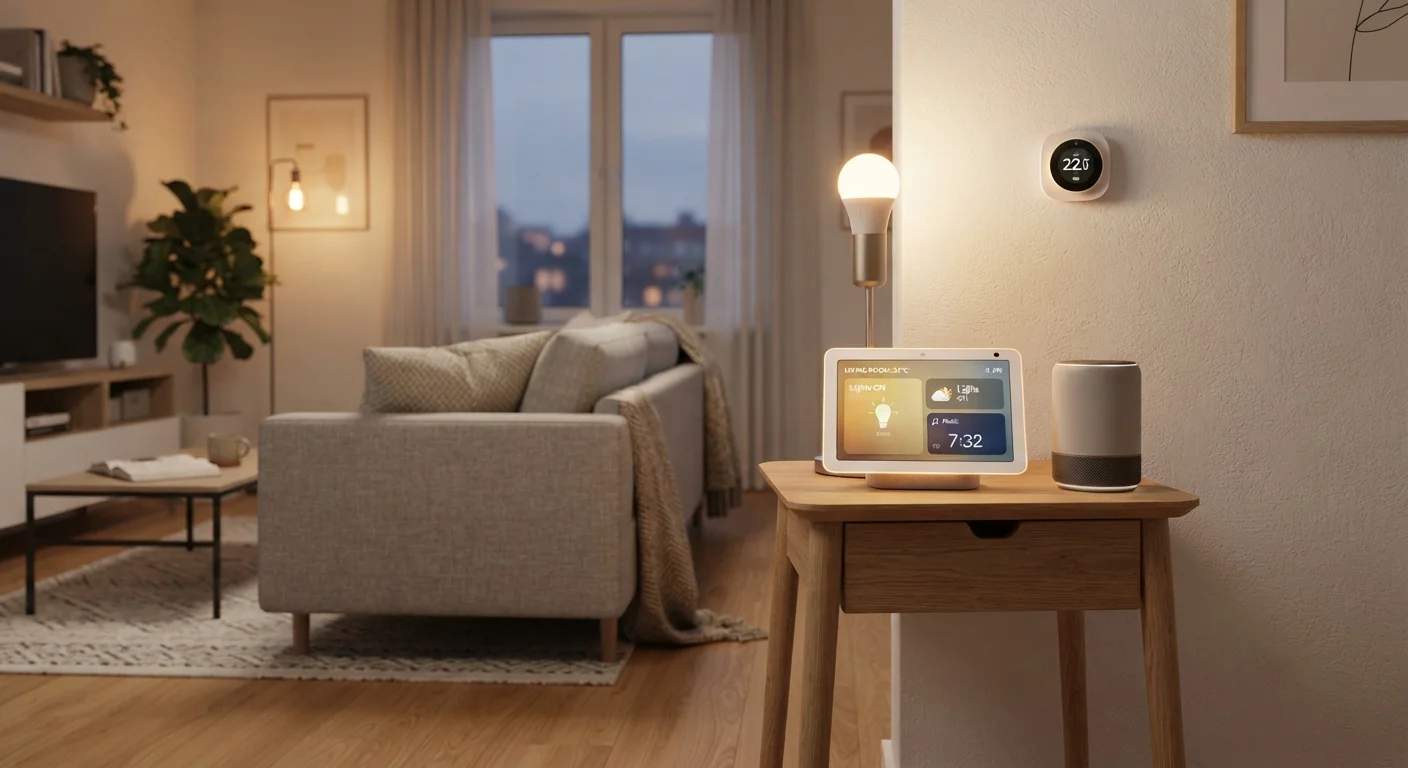
If you've ever tried to get a smart bulb to work with a thermostat you bought from a different brand, you've run into the core problem that ecosystems exist to solve. A smart home ecosystem is the platform layer that sits between your individual devices and you — handling discovery, communication, control, and automation.
Without a shared ecosystem, devices can't find each other, can't receive coordinated commands, and can't trigger automations (like turning off the lights when you lock the front door). The ecosystem provides the rules, the protocols, and often the cloud infrastructure that makes all of this work.
Understanding what a smart home actually involves is a useful foundation before committing to any particular platform. The short version: your ecosystem choice shapes every device purchase you'll make afterward.
600+
Matter-certified device types available
The Connectivity Standards Alliance has certified hundreds of device types under the Matter standard as adoption has expanded across manufacturers.
3-in-1
Platforms one Matter device can support simultaneously
A single Matter-certified device can be controlled by Google Home, Apple HomeKit, and Amazon Alexa at the same time using Matter's multi-admin feature.
The Major Platforms: What Sets Them Apart
Google Home is built around Android integration and Google Assistant. It's broadly compatible with a wide range of devices and excels at voice control and routines tied to your Google account. Its automation tools have improved significantly and it supports Matter devices. The trade-off is a heavy reliance on Google's cloud, meaning most commands route through Google's servers even when your devices are on the same local network.
Apple HomeKit takes the opposite philosophical stance — it prioritizes local processing and hardware-level security certification. Devices must meet Apple's authentication requirements, which historically limited device selection. HomeKit is tightly integrated with iPhones, iPads, Macs, and Apple Watch, making it a natural fit if you're already in Apple's ecosystem. It also supports automation without requiring cloud access for many actions.
Amazon Alexa supports the largest raw number of compatible devices and is widely considered the most accessible entry point for new smart home users. Its strength is breadth; its limitation is that advanced automation and local processing depend heavily on third-party device capabilities rather than a unified platform approach.
See our guide to smart speakers, displays, and hubs to understand how the physical hardware connects to these platforms.
“The promise of the smart home has always been interoperability — but for years, the reality was walled gardens. Standards like Matter represent the industry's recognition that fragmentation was holding everyone back.”
— Connectivity Standards Alliance, Industry consortium overseeing the Matter smart home standard
Matter: The Standard Trying to Unite Them All
Matter is not a brand or a product — it's an open connectivity standard developed by the Connectivity Standards Alliance, backed by Apple, Google, Amazon, Samsung, and dozens of device manufacturers. Its goal is straightforward: a Matter-certified device should work with any Matter-compatible platform, without requiring platform-specific setup or proprietary bridges.
In practice, this means a Matter light switch could be added to both your Google Home and Apple HomeKit simultaneously. Automations in one app can coexist with voice control through another. This multi-admin capability is one of Matter's defining features.
Matter runs over standard IP networking (Wi-Fi and Thread), which also supports local control — commands don't have to round-trip through a manufacturer's cloud server. That makes setups faster and more reliable when your internet goes down.
Check for Matter Certification Before You Buy
When shopping for new smart home devices, look for the Matter logo or certification on the packaging or product listing. This gives you flexibility to use the device across multiple platforms now or in the future. It's one of the simplest ways to future-proof a purchase without needing to predict which platform will dominate long-term.
Matter doesn't solve every compatibility problem. Older devices don't automatically become Matter-compatible, and not all device categories (like cameras and robot vacuums) have Matter support yet. But for new purchases, a Matter certification label is a strong signal that you won't be locked into a single platform.
How to Think About Ecosystem Lock-In
Lock-in happens when your devices only work within one platform and switching becomes expensive or disruptive. This was a serious concern before Matter, and it's still relevant for device categories Matter doesn't yet cover.
A few practical considerations: devices that require a proprietary hub from the manufacturer carry higher lock-in risk. Devices that work exclusively through a manufacturer's cloud — with no local fallback — are vulnerable if that company discontinues the service. And devices that are only voice-controllable through one specific assistant limit your flexibility as your setup grows.
The most common first-time smart home mistakes often involve buying several devices from one ecosystem without realizing that ecosystem doesn't support the device category they want to add later.
If you already have a mixed collection of devices from different eras or brands, it's still possible to build a coherent setup. Strategies for bridging incompatible smart home devices can help you find practical paths forward without starting from scratch.