
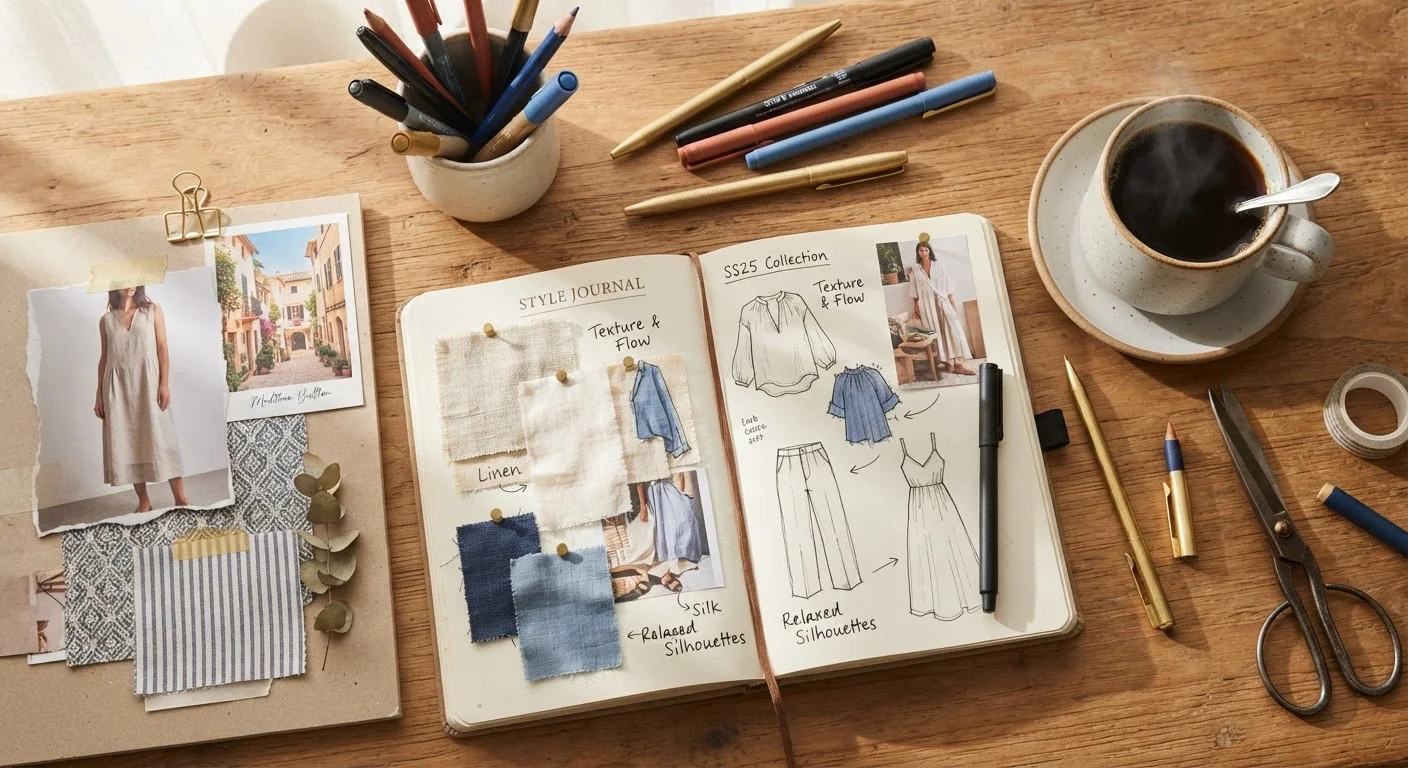
Why Your Inspiration Source Matters
Scrolling for style inspiration sounds harmless, but the source shapes the outcome. When every reference is an influencer's sponsored content or a runway look staged for a photographer, it becomes difficult to distinguish what you actually love from what an algorithm wants you to click. The result? A closet full of impulse buys that somehow never feel like you.
Getting dressed in a way that feels authentic — and confident — starts with drawing inspiration from places designed to surface your preferences, not someone else's brand deals. That's what this list is about. These are the sources that ask you to reflect rather than react, and they're far more likely to help you understand what personal style really means than any trend report will.
Inspiration vs. Imitation
There's a meaningful difference between being inspired by something and trying to replicate it exactly. Inspiration asks: what quality does this have that I want in my wardrobe? Imitation skips that question entirely. The sources on this list work best when you use them to understand your own reactions, not to generate a shopping checklist.
8 Inspiration Sources That Help You Dress Like Yourself
Your Own Closet, Worn and Ignored
Before looking anywhere else, audit what you already own. Pull out every piece you reach for automatically and every piece you've avoided for months. The contrast tells you something honest. Items you love usually share qualities — a silhouette, a fabric weight, a level of formality — that define your instinctive taste better than any quiz.
Flip every hanger backward at the start of the month. What you actually wear becomes obvious fast.
Your closet already contains your best style data — you just have to read it.
Physical Mood Boards and Cut-Out Collages
Tearing images from magazines and arranging them on a physical board forces a slower, more deliberate kind of curation. Unlike digital saves that pile up unseen, a physical board is always visible — and patterns emerge naturally. You may notice you keep reaching for earthy tones or structured silhouettes without even realizing it.
The act of choosing what to physically cut and keep sharpens your eye in ways that clicking a heart symbol simply doesn't.
Physical curation forces intentionality in a way endless digital saves never will.
Street Style in Your Actual City
Real people dressing for real weather, real commutes, and real budgets are far more instructive than editorial shoots. Pay attention on your way to work, at the grocery store, or at a neighborhood event. When someone's outfit makes you stop and think, ask yourself what specifically caught your attention — the proportions, the color combination, the layering.
This kind of observation is grounded in reality, which makes it immediately actionable for dressing with more intention.
Real people in real contexts offer inspiration that's immediately wearable — no styling team required.
Film and Television Costume Design
Costume designers build coherent visual identities for characters from scratch — and those choices are deliberate. A character's wardrobe is meant to communicate personality, status, and mood across dozens of scenes. Watching with that lens, you may find a fictional character's aesthetic resonates more consistently with your instincts than any influencer's feed.
Notice the textures, silhouettes, and color palettes rather than the specific pieces. That translation is the useful part.
Costume design is personal style with intention baked in — perfect for studying what cohesion looks like.
A Style Journal or Reflection Notebook
Writing about what you wore, how it made you feel, and what you wish you'd worn instead builds self-awareness faster than most external sources. Over weeks, you'll notice recurring regrets (buying things you don't actually reach for) and recurring wins (outfits that feel effortless). This kind of data is personalized in a way no trend report can replicate.
Even three sentences after getting dressed in the morning adds up quickly into a clear picture of your preferences.
A style journal turns daily dressing into a running record of what actually works for you.
Vintage and Secondhand Shopping as Exploration
Browsing a secondhand shop without a shopping list is one of the most useful style exercises available — and it's easy on the budget. Without the pressure of newness or seasonal trends, you're forced to respond only to the piece itself: the cut, the feel, the color. What you keep picking up and examining tells you something real about your taste.
For practical strategies on making the most of these browsing sessions, smart shopping tips can help you shop with purpose rather than impulse.
Secondhand browsing without a list is pure taste-testing — and it's budget-friendly by design.
People You Admire in Your Everyday Life
A colleague, a neighbor, a family member — someone whose appearance feels effortlessly themselves — is worth studying more closely than any celebrity. Their style works in the same world you inhabit: similar climates, similar occasions, similar constraints. What you admire about how they dress is almost always translatable to your own wardrobe in a practical way.
You don't need to copy them. Just ask yourself what quality their approach has that you'd like more of in your own.
People in your actual life dress for your actual world — their style is more actionable than any celebrity's.
Curated, Intentional Social Media Use
Social media isn't inherently bad for style development — it's how most people use it that backfires. Instead of passively scrolling whatever the algorithm surfaces, actively seek out accounts that show a consistent, genuine point of view rather than sponsored variety. Unfollow accounts that make you feel inadequate or impulsive, and notice which accounts make you feel curious and energized instead.
Used this way, social media becomes a tool for refining taste rather than fueling comparison and inconsistency.
Curating your feed intentionally turns a comparison trap into a genuine style development tool.
Start With One Source at a Time
Trying to use every inspiration method at once can feel just as overwhelming as doomscrolling. Pick one — your closet audit or a physical mood board — and spend two weeks with it before adding another. Depth beats breadth when you're trying to build genuine self-knowledge about how you want to dress.
Putting It All Together
The goal of gathering style inspiration isn't to assemble a Pinterest board you never look at again — it's to build a clearer picture of how you want to move through the world. Once you know what consistently excites you, you can shop with real intention and build a signature look without starting over from scratch.
If you're just getting started, our guide to finding your aesthetic walks through the foundational steps at a comfortable pace. And for the day-to-day practice of getting dressed more purposefully, explore everyday fashion tips that work for real wardrobes and real budgets.