
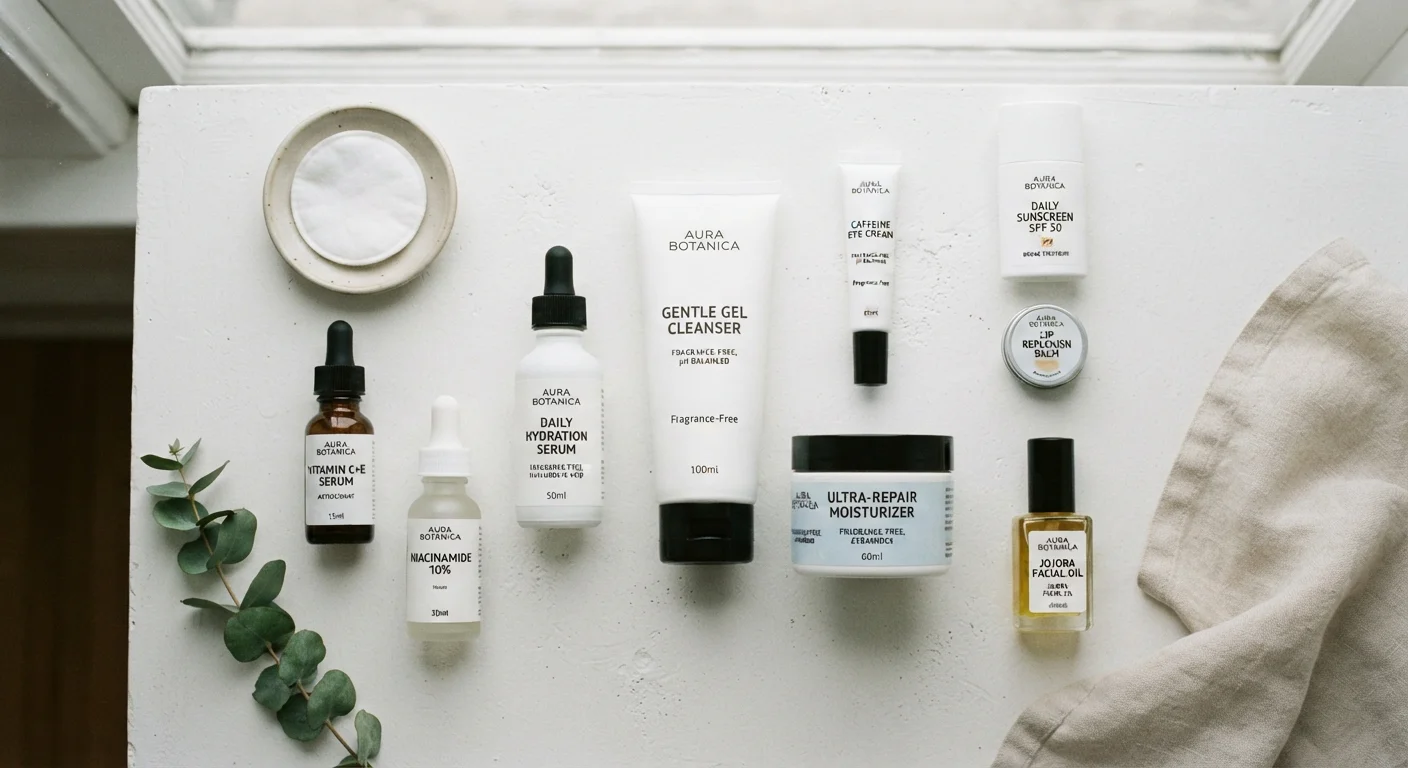
Why This Debate Exists at All
Fragrance is one of the most divisive topics in modern skincare — and both camps have legitimate points. On one side, dermatologists and sensitive-skin advocates warn that fragrance is a leading cause of contact dermatitis and should be avoided entirely. On the other, formulators and consumers alike argue that the fragrance-free movement has become more fear-driven than evidence-based.
The truth is that "fragrance" is an umbrella term. It can refer to synthetic fragrance compounds, natural essential oils, or isolates derived from both. Each carries a different risk profile, and lumping them together obscures what actually matters: concentration, formulation context, and your individual skin.
Understanding this debate helps you make smarter choices without defaulting to blanket bans or dismissing real concerns. See how this connects to the bigger picture of ingredients that don't play well together in your routine.
The Case Against Fragrance
Skeptics of fragrance in skincare aren't being dramatic. Research consistently identifies fragrance as one of the most common allergens in cosmetic products. According to the American Contact Dermatitis Society, fragrance is among the top allergens identified in patch testing studies.
Enhances sensory experience and routine adherence
Scent creates a multi-sensory ritual that can make skincare feel more enjoyable, which often improves consistency — and consistent routines produce better long-term results.
Regulated concentrations are generally tolerated
Cosmetic regulatory bodies in the US and EU set limits on fragrance compound use, meaning commercially available products typically stay within ranges considered acceptable for most skin types.
Masking-agent-free options aren't always easy to find
Unscented alternatives often contain chemical masking agents to neutralize natural odors, which can themselves cause reactions — so "fragrance-free" isn't always the simpler choice.
Leading cause of cosmetic contact dermatitis
Fragrance consistently ranks among the top allergens identified in cosmetic patch testing, according to dermatology research and contact dermatitis societies.
Sensitization can build gradually over time
Repeated low-level exposure to certain fragrance compounds can train the immune system to react, meaning tolerance today doesn't guarantee tolerance long-term.
Higher risk with leave-on, large-area products
Lotions, serums, and sunscreens applied across large skin surfaces and left on for hours increase the likelihood of absorption and reaction compared to rinse-off formulas.
Natural fragrances aren't inherently safer
Essential oils like lavender, citrus, and bergamot are among the most commonly flagged allergens in contact dermatitis cases — natural origin doesn't eliminate sensitization risk.
One concern that doesn't get enough attention is sensitization — a process where repeated low-level exposure gradually triggers an immune response, even if fragrance never bothered you before. This means that fragrance-free products are often the safer long-term bet for anyone with conditions like eczema, rosacea, or a compromised skin barrier.
Products applied to large surface areas — body lotions, sunscreens, leave-on treatments — pose more risk than rinse-off formulas simply because of prolonged contact time. If your barrier is already struggling, that's worth factoring in. Protecting your skin barrier starts with recognizing what stresses it out.
The Case for Fragrance (In Context)
Fragrance-free is not automatically a safety guarantee, and this is where the anti-fragrance argument sometimes oversimplifies. Unscented products can still contain masking agents — chemicals added to neutralize a formula's natural smell — which carry their own sensitization potential. Meanwhile, "fragrance-free" says nothing about preservatives, dyes, or active ingredients that may irritate just as readily.
~1–3%
General population with fragrance allergy
Dermatology literature estimates that contact allergy to fragrance affects roughly 1–3% of the general population, though rates are higher in those with pre-existing skin conditions.
Top 5
Fragrance rank among cosmetic allergens
Fragrance is consistently identified within the top allergen categories in patch testing studies conducted by dermatological associations in the US and Europe.
For consumers with resilient, non-reactive skin, fragranced products used at regulated concentrations are generally well-tolerated. Global cosmetic regulatory bodies set limits on fragrance compound concentrations specifically because low-level use in properly formulated products is considered acceptable for the general population.
There's also a real psychological dimension: scent affects mood, ritual, and the sensory experience of self-care. For many people, a pleasantly scented moisturizer is part of what makes a routine feel worth keeping. That's not trivial.
"Fragrance-Free" vs. "Unscented": Not the Same Thing
"Fragrance-free" means no fragrance ingredients were added to the formula. "Unscented" often means masking agents were used to neutralize the product's natural smell — and those agents can be just as irritating for sensitive skin. When in doubt, check the full ingredient list rather than relying on front-label claims.
How to Make the Right Call for Your Skin
The most useful framework isn't "fragrance is bad" or "fragrance is fine" — it's asking a few targeted questions about your own situation.
- Is your skin barrier compromised? Active breakouts, eczema, rosacea, or recent exfoliation all increase sensitivity. Fragrance-free is the safer choice during flare-ups.
- Where are you applying it? Leave-on products on large areas (face, neck, chest) warrant more scrutiny than a hand wash.
- Have you patch tested? If you're unsure how your skin will respond to a new product, run through a patch-testing checklist before full application.
- What's your history? If you've reacted to fragranced products before, that pattern matters — the risk of sensitization compounds with exposure.
A well-structured routine that accounts for your skin's actual needs matters more than policing any single ingredient category. Understanding layering order is just as essential as knowing what's in each product.
This article is for general informational and educational purposes only. It is not a substitute for professional dermatological advice. If you experience persistent skin reactions or concerns, consult a licensed dermatologist.