
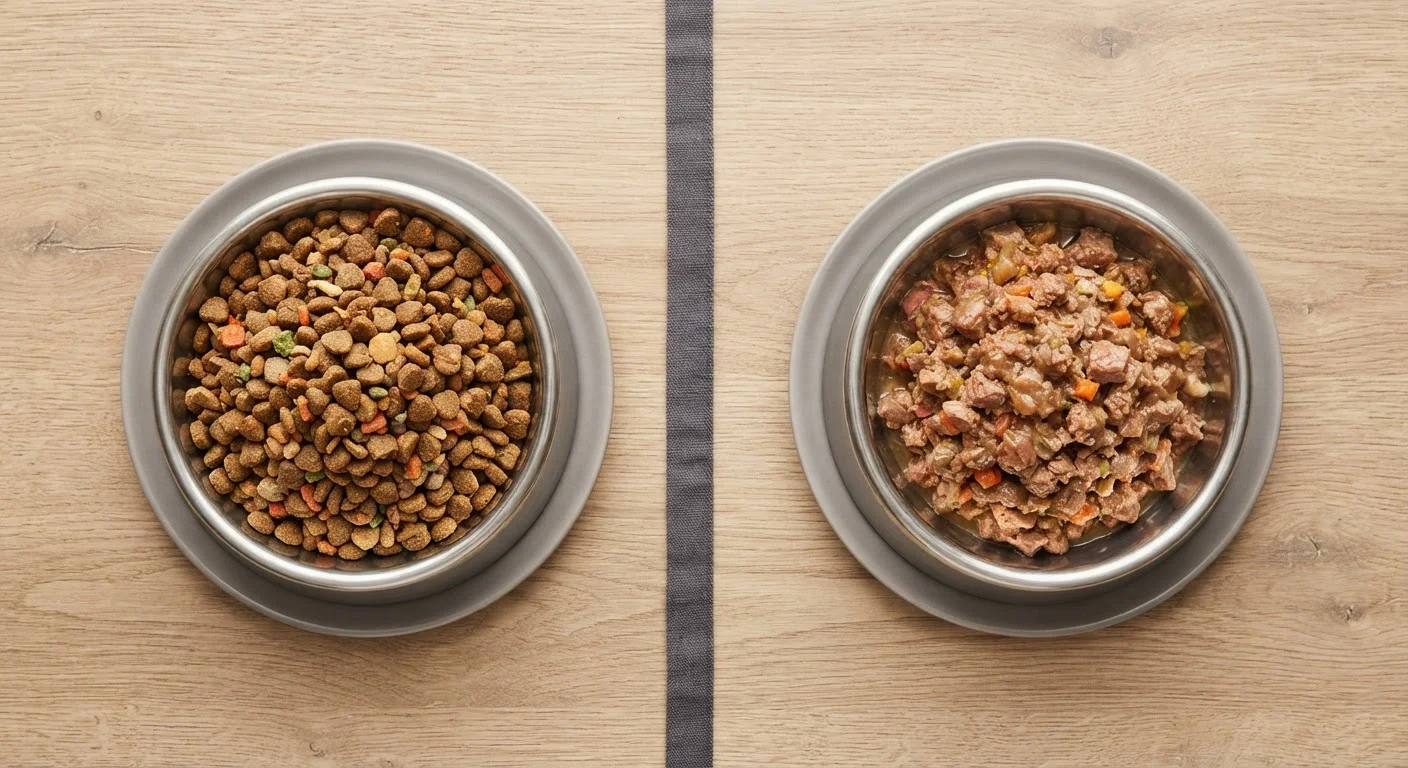
Moisture Content: The Most Significant Nutritional Gap
The single biggest difference between dry kibble and wet food is not flavor or texture — it is water. Wet food is typically composed of 70–80% moisture, while dry kibble contains roughly 6–10%. That gap has real consequences for how your pet processes nutrients and stays hydrated.
For cats, this distinction is particularly meaningful. Cats evolved from desert-dwelling ancestors and have a naturally low thirst drive, often drinking less water than they need when fed exclusively dry food. Consistently low fluid intake can contribute to urinary tract problems and kidney stress over time, according to general veterinary guidance. Feeding wet food — or a combination of both formats — helps cats consume more water passively through their meals.
Dogs generally drink water more reliably than cats, but pets with kidney disease, diabetes, or a history of urinary crystals often benefit from the extra hydration wet food provides. If you want to understand more about how much water your pet actually needs, this guide on pet hydration walks through daily fluid requirements by species and size.
| Criterion | Dry Kibble | Wet Food |
|---|---|---|
| Moisture content | ~6–10% | ~70–80% |
| Cost per serving | Generally lower | Generally higher |
| Shelf life after opening | Weeks (sealed bag) | 1–2 days (refrigerated) |
| Dental abrasion benefit | Modest mechanical action | Minimal to none |
| Palatability for picky eaters | Moderate | Higher (stronger aroma) |
| Protein content (typical) | Moderate | Higher relative to calories |
| Carbohydrate content | Higher (extrusion process) | Generally lower |
| Ease of portion control | Easy — measurable by cup | Moderate — requires measuring |
Dental Health, Palatability, and Practical Costs
One common claim is that dry kibble cleans teeth. The reality is more nuanced. Chewing hard kibble does create some mechanical abrasion on tooth surfaces, which may modestly reduce tartar accumulation. However, many kibbles break before reaching the gumline, limiting this benefit. Wet food, by contrast, does not provide that abrasive action and can leave residue that contributes to plaque if teeth are not brushed or otherwise cared for. Regardless of food format, routine dental care — including professional veterinary cleanings — remains the most effective approach.
Palatability is another area where wet food often has an edge. Its stronger aroma and softer texture make it more appealing to picky eaters, senior pets with diminished smell, and animals recovering from illness or surgery. Dry kibble, while accepted readily by most healthy dogs and many cats, can sometimes feel less enticing, particularly for cats accustomed to higher moisture content.
On cost, dry kibble is generally the more economical option. A pound of kibble delivers more calories per dollar than an equivalent weight of canned food, and an open bag stays fresh for weeks when sealed properly. Wet food, once opened, must be refrigerated and used within a day or two, adding complexity to meal prep and increasing the risk of waste.
70–80%
Moisture content in wet pet food
Compared to roughly 6–10% in dry kibble, according to general pet nutrition guidelines.
~60%
Of cats fed dry-only diets may under-drink
Veterinary nutritionists note that cats have a naturally low thirst drive, making dietary moisture an important hydration source.
2x–4x
Typical cost-per-calorie difference
Dry kibble commonly delivers 2 to 4 times more calories per dollar compared to equivalent wet food formulations.
Comparing Nutrition: Is One Format More Complete?
Both dry and wet foods can be nutritionally complete, provided they meet the standards established by the Association of American Feed Control Officials (AAFCO). AAFCO nutritional adequacy statements on a label indicate that a food either meets established nutrient profiles or has been validated through feeding trials — a distinction worth understanding. For more on reading those labels accurately, see how to read a pet food label without the confusion.
Dry food typically contains more carbohydrates than wet food due to the extrusion process used to form kibble. Wet food, by contrast, tends to be higher in protein and fat relative to its caloric density. Neither profile is inherently better — what matters is whether the overall formulation suits your pet's life stage, health status, and caloric needs.
For a deeper look at ingredients, guaranteed analysis panels, and the marketing language that can obscure what's actually in a bag or can, decoding pet food labels is a useful companion resource.
This article provides general educational information about pet nutrition and is not a substitute for personalized veterinary advice. Always consult your veterinarian before making significant changes to your pet's diet, especially if your pet has an existing health condition.
Mixed Feeding Is a Recognized Option
Many veterinarians support combining dry and wet food — sometimes called mixed or combo feeding. This approach can help balance hydration benefits with cost savings and dental considerations. If you choose to mix formats, be sure to account for total daily caloric intake to avoid overfeeding. Your veterinarian can help you calculate the right proportions for your specific pet.