
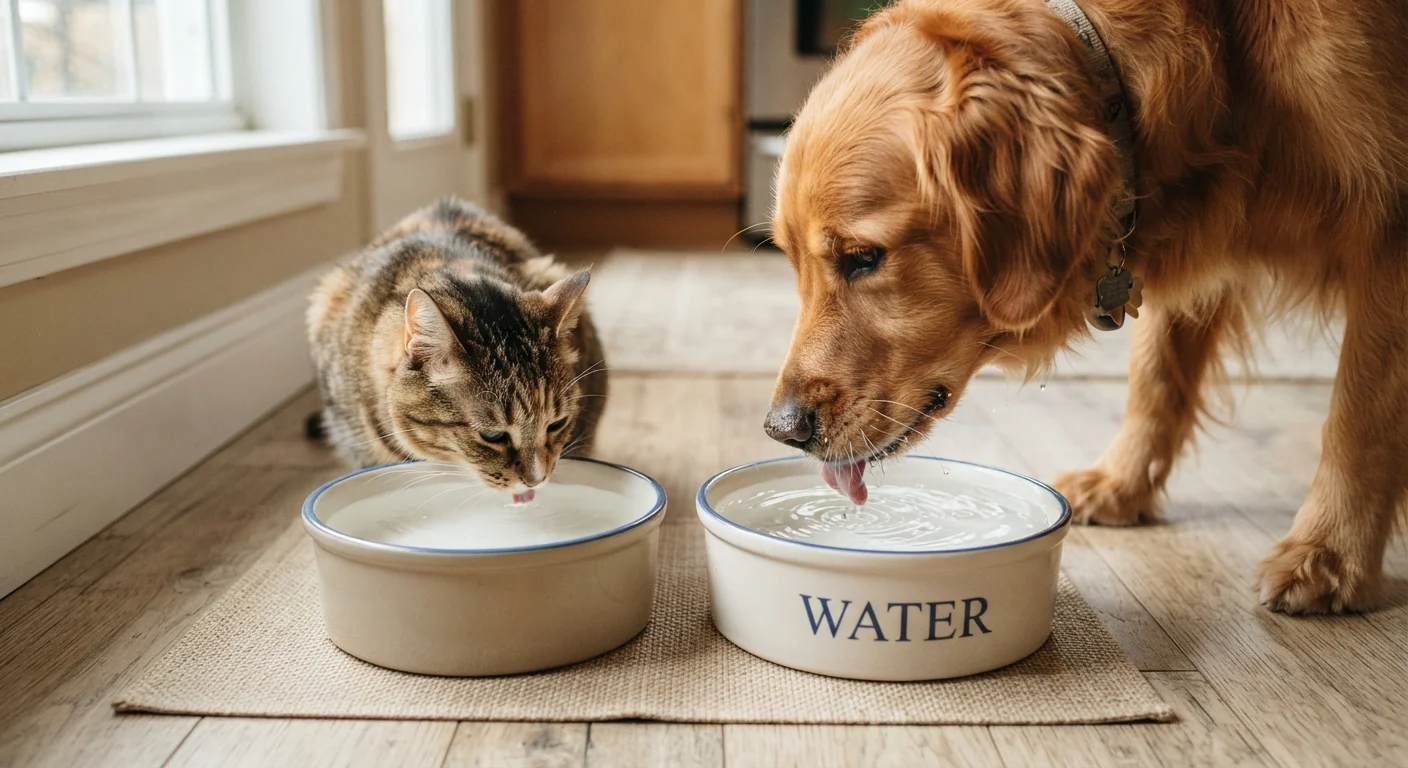
How Much Water Does Your Pet Actually Need?
Water requirements vary by species, size, diet, activity level, and health status — but general benchmarks give pet owners a useful starting point.
Dogs typically need about one ounce of water per pound of body weight per day. A 50-pound dog, for example, needs roughly 50 ounces — a little over six cups — under normal conditions. Cats have a lower baseline thirst drive than dogs and tend to drink less, needing approximately 3.5 to 4.5 ounces per 5 pounds of body weight daily. However, cats on dry kibble diets should drink more than those eating wet food, since wet food can supply 70–80% of a cat's daily moisture needs. Learn more about how food type affects hydration in our guide to dry kibble vs. wet food.
These numbers shift with circumstances. Hot weather, exercise, nursing, illness, and certain medications all increase demand. Always err toward offering more water and letting your pet self-regulate, unless a veterinarian has recommended fluid restrictions for a specific health condition.
Recognizing Dehydration Before It Becomes Serious
Mild dehydration is easy to overlook because early signs are subtle. Knowing what to look for can help you act before the situation escalates.
Dehydration
A state in which the body loses more fluid than it takes in, impairing normal bodily functions. In pets, even mild dehydration can affect organ function, digestion, and energy levels.
Skin Tent Test
A quick physical assessment where a fold of skin is gently pinched and released. Slow return to normal position can indicate dehydration, though a vet evaluation provides more accurate results.
Moisture Content
The percentage of water present in pet food. Wet foods have high moisture content (70–80%), while dry kibble contains very little (6–10%), affecting how much additional water a pet needs to drink.
Fluid Restriction
A veterinary recommendation to limit water intake, sometimes prescribed for pets with certain heart or kidney conditions. Never restrict a pet's water without direct veterinary guidance.
The skin tent test is one quick field check: gently pinch a small fold of skin between your pet's shoulder blades, then release. In a well-hydrated pet, the skin snaps back almost immediately. If it returns slowly or holds a ridge for more than a second or two, dehydration may be present. This test is a rough indicator, not a diagnosis — a veterinarian can assess hydration status more accurately through physical examination and bloodwork.
Other warning signs include dry or tacky gums, sunken eyes, lethargy, reduced appetite, and darker-than-usual urine. Severe dehydration — indicated by extreme weakness, collapse, or prolonged skin tenting — is a veterinary emergency. If you notice these signs, contact your vet promptly rather than attempting home treatment. For a broader view of what healthy versus concerning looks like day to day, see our article on signs your pet is thriving.
Practical Ways to Encourage Your Pet to Drink More
Even when water is available, some pets — especially cats — are inconsistent drinkers. Small changes to how and where you offer water can make a meaningful difference.
When Drinking Too Much Is Also a Concern
While dehydration is the more recognized risk, dramatically increased water consumption — called polydipsia — can also signal a health problem. Conditions such as diabetes, kidney disease, and Cushing's disease in dogs can cause excessive thirst. If your pet suddenly starts drinking noticeably more than usual, schedule a veterinary appointment rather than assuming it's simply due to warm weather.
- Keep bowls clean and refilled daily. Pets are sensitive to stale or contaminated water. Wash bowls with soap and water at least every other day.
- Try a pet water fountain. Moving water appeals to many cats and some dogs, mimicking natural running water sources. The circulation also helps keep the water oxygenated and cooler.
- Offer multiple water stations. Placing bowls in several locations — especially in multi-pet households — reduces competition and encourages casual drinking throughout the day.
- Add moisture through food. Mixing a small amount of low-sodium broth into dry food or transitioning partially to wet food increases daily moisture intake without requiring your pet to drink more.
- Location matters for cats. Cats often prefer water sources away from their food bowls, as instinct tells them water near prey may be contaminated.
Senior pets may drink differently than younger ones — either more or less — and changes in drinking habits can signal underlying health changes. Our guide to senior animal care covers what to watch for as your pet ages.
Tracking water intake is also a valuable habit. It's worth including in your broader health monitoring routine — the annual pet health checklist can help you stay consistent between vet visits.
This article provides general information about pet care and is not a substitute for professional veterinary advice. If your pet shows signs of dehydration or unusual changes in drinking habits, consult a licensed veterinarian.