
Why This Question Matters More Than Ever
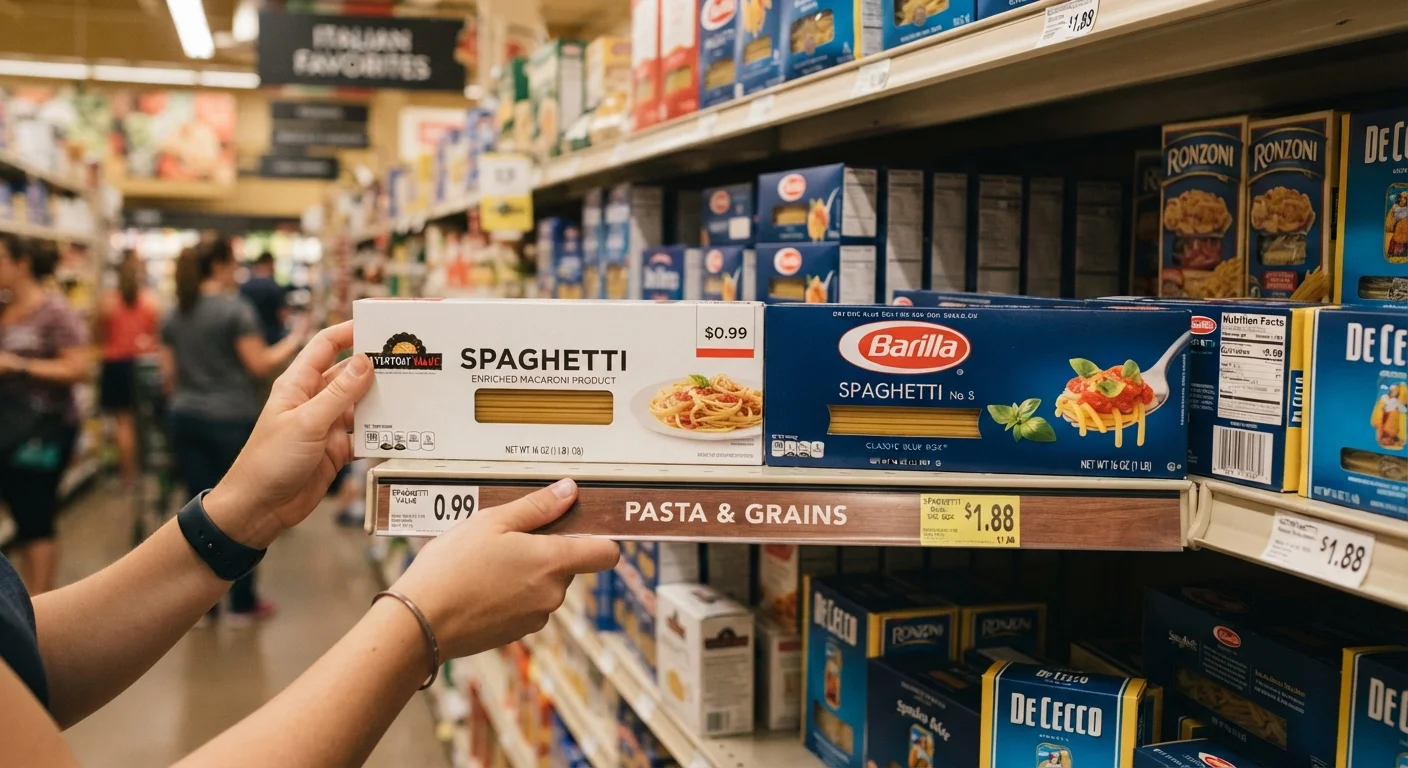
American households spend a significant portion of their income on consumer goods, and the store-brand vs. name-brand decision plays out dozens of times each month. The marketing budgets behind name brands are substantial — and those costs get passed to consumers. Meanwhile, private-label products have improved steadily in quality and variety over the past two decades, making the default assumption that "name brand equals better" increasingly unreliable.
Understanding when the premium is justified — and when it simply isn't — is one of the more practical consumer skills you can develop. It connects directly to what value actually means when buying: price is just one input.
| Criterion | Store Brands | Name Brands |
|---|---|---|
| Average price difference | 20–30% less on average | Baseline price point |
| OTC drug equivalence | FDA-mandated same active ingredient | Same active ingredient, higher price |
| Proprietary formulas | Cannot replicate patented blends | May hold unique formulations |
| Pantry staples quality | Generally equivalent | Rarely meaningfully superior |
| Batch-to-batch consistency | Can vary more | Often more controlled |
| Marketing/packaging cost passed on | Minimal | Significant |
| Satisfaction guarantees | Varies by retailer | More commonly offered |
Where Store Brands Hold Up Equally Well
Several product categories show consistent parity between store and name brands in independent testing and regulatory review:
- OTC medications: The FDA mandates that generic over-the-counter drugs contain the same active ingredients, in the same amounts, as their branded equivalents. A store-brand acetaminophen tablet is chemically identical to its name-brand counterpart in terms of active ingredient.
- Pantry staples: Flour, sugar, rice, salt, canned vegetables, and similar commodities are agricultural or processed goods with little room for meaningful differentiation. Ingredient lists are often identical.
- Cleaning products: Most household cleaners rely on a relatively small set of active compounds. Store-brand bleach, dish soap, and laundry detergent frequently match name-brand performance in standard use.
- Paper goods: Paper towels, tissues, and toilet paper vary more by ply and thickness than by brand origin. Store brands often match or exceed name-brand specs at lower price points.
If you're also weighing whether buying these in larger quantities makes sense, see our piece on bulk buying for the home for a balanced look at when that strategy pays off.
~25%
Average store-brand price discount vs. name brands
Consumer research from the Private Label Manufacturers Association has historically estimated store brands run roughly 20–25% less than comparable name-brand products.
~40%
Share of U.S. grocery units that are private label
Private label market share in U.S. grocery has grown steadily, reflecting increased consumer confidence in store-brand quality.
Where Name Brands May Still Earn the Premium
Not every category is a coin flip. There are genuine reasons name brands hold an advantage in specific situations:
- Proprietary formulations: When a name brand holds a patent — or has developed a genuinely unique ingredient combination — no private label can legally replicate it. This is common in skincare, certain supplements, and specialty food products.
- Consistency across production runs: Some consumers report that store-brand versions of certain products vary more batch to batch. Name brands with large quality-control infrastructure may offer more predictable results.
- Specialty or complex products: In categories like electronics accessories or appliance components, name-brand items sometimes carry better engineering tolerances or compatibility guarantees.
- Infant formula: This is a category where both store and name brands meet strict FDA standards, but individual infant needs can vary. Any decision to switch formulas should involve a pediatrician — this is general information, not medical advice.
Independent testing data on store vs. name brand performance is explored in more depth in this related piece: what the research actually shows.
A Note on 'Made by the Same Manufacturer'
You may have heard that store brands are sometimes produced in the same facility as name brands. This does happen in some categories — particularly canned goods, dairy, and certain over-the-counter products — but it isn't universal and retailers rarely disclose specific manufacturing relationships. The more reliable comparison method is to read the actual ingredient or active-ingredient label rather than assuming origin.
A Practical Framework for Deciding
Rather than applying one rule across all purchases, a category-by-category approach works better:
- Compare active ingredients or ingredient lists first. If they match, the product is functionally equivalent regardless of label.
- Check whether any patent or proprietary claim is relevant. If the name brand advertises a unique formula, verify what it actually contains before assuming the store brand differs meaningfully.
- Factor in return policies and guarantees. Some name brands offer satisfaction guarantees that store brands don't. For higher-stakes purchases, that matters.
- Account honestly for preference. If you genuinely prefer the taste, texture, or scent of a name brand and that enjoyment matters to you, that's a legitimate reason to pay more — just make it a conscious choice.
How and where you shop also affects these tradeoffs. Shopping online vs. in-store changes what private-label options are available and how easily you can compare labels side by side.
This article is for general informational purposes only. For decisions involving health products, infant nutrition, or medications, consult a qualified healthcare professional. For financial decisions, consult a licensed financial adviser.