
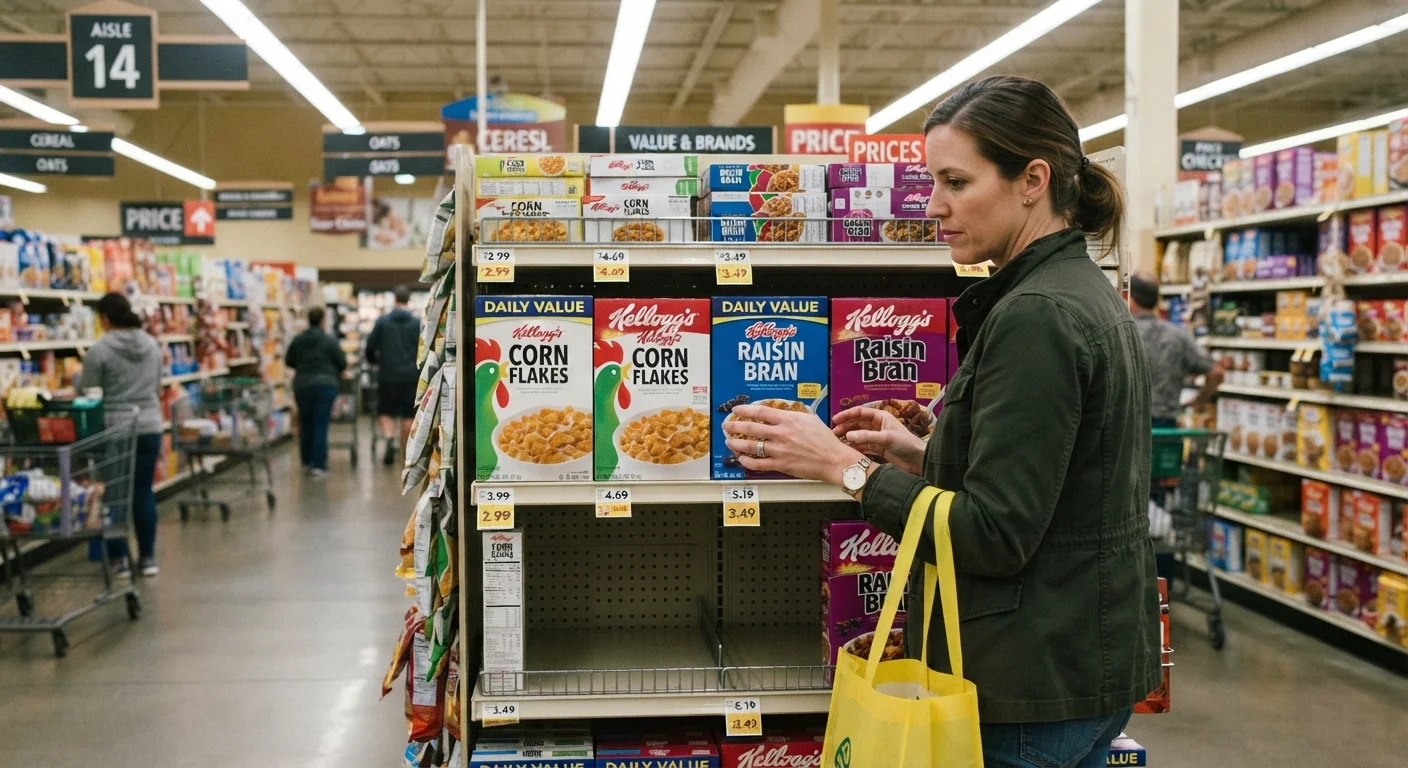
The Manufacturing Reality Behind the Labels
One of the most durable findings in consumer research is that many store-brand products are manufactured in the same facilities as their name-brand counterparts. Retailers often contract directly with the same producers, resulting in products with nearly identical formulations sold under different packaging at different price points.
This is especially documented in categories like canned vegetables, dairy products, and over-the-counter (OTC) medications. For OTC drugs - products like pain relievers, antacids, and allergy tablets - the U.S. Food and Drug Administration (FDA) requires that store-brand generics contain the same active ingredients in the same dosages as name-brand equivalents. In this regulated category, the label is often the only meaningful difference.
For a broader look at how to evaluate what you're actually paying for, understanding the frameworks behind value can sharpen your shopping instincts across any product category.
What Independent Testing Tends to Find
Consumer testing organizations have compared store brands and name brands across dozens of categories over decades. Their consistent finding: in a majority of tested product types, store brands perform comparably to name brands on objective measures - taste panels, ingredient analysis, and performance benchmarks.
Categories where store brands reliably score well in blind tests include:
- Pantry staples (flour, sugar, cooking oils, canned goods)
- Paper products and cleaning supplies
- OTC medications with matching active ingredients
- Basic personal care items such as hand lotion and cotton products
Categories where name brands have shown more consistent differentiation include premium appliances, certain infant formula products (where specific formulations may vary), and specialty food items where proprietary recipes or sourcing genuinely differ.
| Criterion | Store Brand | Name Brand | |
|---|---|---|---|
| Average price difference | 20%-30% less | Higher baseline price | |
| OTC medication equivalence | FDA-mandated match | Reference formulation | |
| Manufacturing source | Often same facility | Often same facility | |
| Marketing & packaging investment | Minimal | Substantial | |
| Blind taste test performance | Frequently comparable | Slight edge with branding visible | |
| Specialty product differentiation | Limited in complex categories | More consistent track record |
For those weighing broader shopping strategy, identifying when the category actually matters offers a practical framework.
The Role of Perception and Marketing
Research in consumer psychology consistently shows that people rate products higher when they believe they are consuming a premium brand - even when the product is identical. In controlled blind tastings, preferences often shift significantly once packaging is revealed. This means a meaningful portion of the perceived quality gap between name brands and store brands is driven by marketing investment, not product formulation.
Name brands spend heavily on advertising, which is factored into retail pricing. Store brands carry none of that overhead, which is a primary driver of their lower shelf price. That cost difference - commonly estimated at 20%-30% on comparable products - is largely a reflection of marketing spend, not production quality.
Start With One Category at a Time
Switching entirely to store brands all at once can feel disorienting. A more reliable method is to swap one product category at a time - starting with regulated items like OTC medications or commodity staples like flour - and evaluate before expanding. This lets you build confidence based on your own experience rather than assumptions.
Pairing a store-brand strategy with other cost-conscious habits can compound savings. Bulk buying, when done correctly, is one complementary approach worth evaluating for household staples.
Making a Practical Decision at the Shelf
A pragmatic approach is to treat store brands as the default for regulated, ingredient-matched, or commodity products, and reserve name-brand spending for categories where a track record of differentiated performance can be verified independently - not just inferred from price or packaging.
A few practical guidelines:
- Check active ingredients on OTC medications directly on the label - the FDA mandates equivalent formulations, so the comparison is straightforward.
- Run a personal taste or use test for food and personal care items before committing to a full switch, since individual preference does vary.
- Be skeptical of premium pricing alone as a quality signal; look for independent test data or ingredient transparency where available.
- Factor in the return policy; if a store brand underperforms, many retailers make exchanges simple.
Your household's shopping approach is part of a broader set of decisions about where and how you buy. Choosing the right retail channel can also influence price and availability of store-brand options.
This article is for general informational purposes only and does not constitute financial or purchasing advice tailored to your individual situation.