
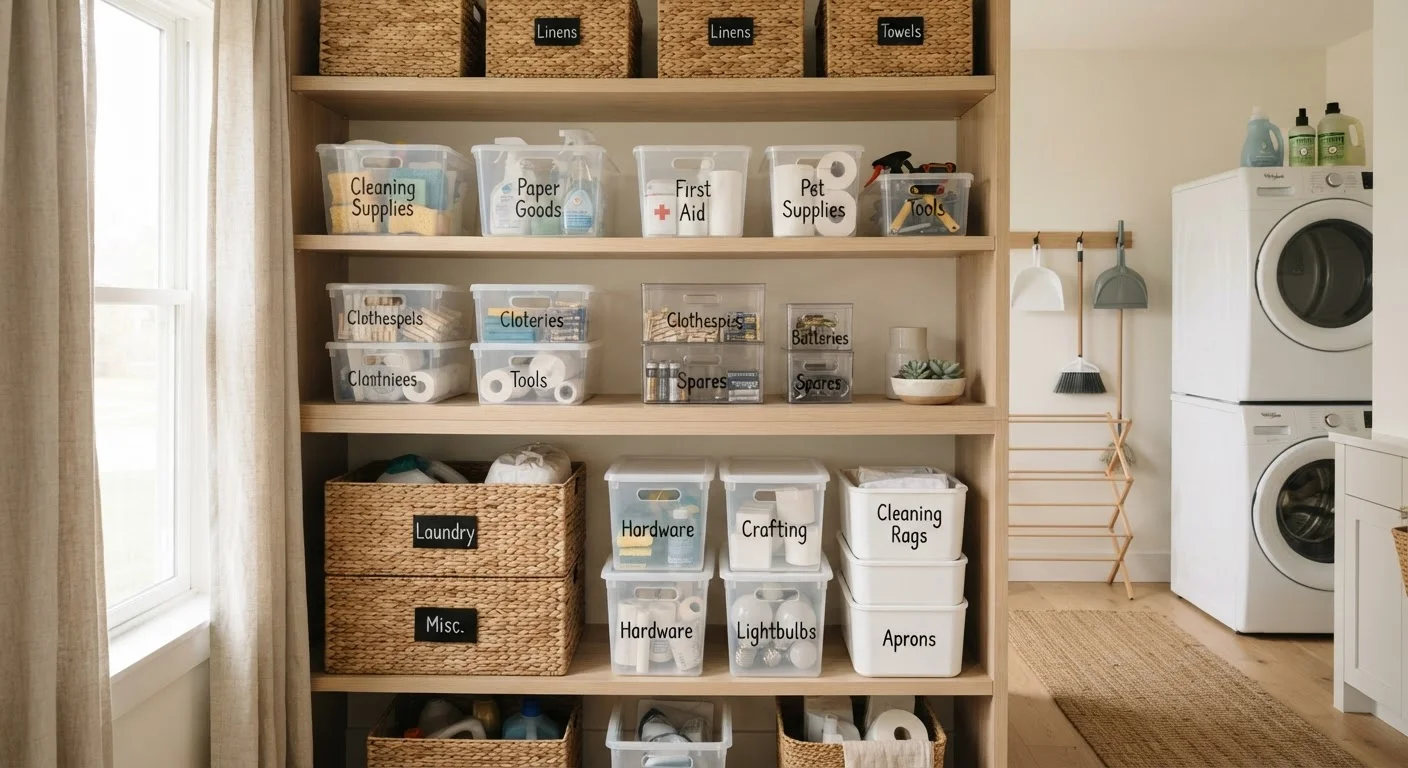
Container Formats: What Each Type Is Actually Designed For
Home storage products come in a handful of core formats, each built around a specific use case. Knowing which format to reach for saves both space and money.
- Clear stackable bins
- Rigid plastic containers with lids, usually rectangular. Designed for shelves in closets, garages, or basements where items need dust protection but quick visibility. Best for bulky seasonal goods, sports equipment, or holiday décor.
- Fabric storage cubes
- Collapsible boxes made from canvas or non-woven fabric. Sized to fit cube shelving units. Well-suited for items retrieved frequently - toys, accessories, small linens. They don't seal, so avoid damp areas.
- Drawer organizers
- Flat, compartmentalized trays dropped into a drawer. Available in bamboo, plastic, or expandable designs. Used in kitchen, bathroom, and office drawers to separate small items that would otherwise clump together.
- Under-bed storage bags
- Low-profile, zipper-sealed bags or rolling trays that fit the clearance under a bed frame. Used for off-season clothing, extra bedding, or shoes. See the linen closet guide for sizing guidance on bedding sets.
- Decanted canisters
- Airtight jars or containers used to transfer pantry staples - flour, pasta, grains - out of original packaging. Improves shelf legibility and reduces spills.
Labeling Systems: Formats and When to Use Them
A container without a label is only half a solution. The right labeling method depends on how permanent you need the label to be and how often the contents change.
Decanting
Transferring food or household products from their original packaging into uniform containers. It improves shelf organization and makes it easier to see quantities at a glance.
Stackable bin
A rigid container designed with a flat lid and base that allows identical units to be stacked vertically. Common in garage, basement, and closet storage.
Cube storage
A modular shelving system built around uniform square cubbies, typically 12-13 inches per side. Fabric cubes or baskets are inserted into each opening.
Label maker
A handheld device that prints text onto adhesive plastic tape. Produces uniform, laminated labels commonly used for filing systems and shelving.
Pegboard
A rigid panel with evenly spaced holes designed to hold hooks and accessories. Commonly mounted on garage or workshop walls to organize tools and supplies vertically.
Drawer divider
An insert placed inside a drawer to create separate compartments for small items. Available in fixed or adjustable/expandable configurations.
- Permanent adhesive labels - Pre-printed or written on label stock with a strong adhesive. Ideal for containers that will always hold the same thing (e.g., holiday lights, tax documents).
- Chalkboard labels - Reusable labels coated with a chalkboard surface. Written on with chalk or chalk markers, then wiped clean when contents change. Good for pantry items and children's toy bins.
- Label maker tape - Plastic laminate tape produced by a handheld device. Durable, legible, and consistent. Useful for filing systems, garage shelves, and drawer dividers where a uniform look is practical.
- Dry-erase labels - Similar to chalkboard labels but erased with a dry cloth. Often used in kitchen freezers or meal-prep containers.
- Color-coded dot stickers - Simple visual tags that assign a color to a category (e.g., blue = winter clothing, red = first aid). Useful in shared households or when many containers are in the same area.
For households tracking what they own, consistent labeling directly supports the practice described in the household inventory guide - reducing duplicate purchases and waste.
Storage Systems by Room: Matching Format to Function
Different areas of the home create different storage conditions - humidity, access frequency, and item size all vary. Matching the container format to the room avoids common mistakes.
Humidity and Container Choice
Fabric-based storage cubes and cardboard boxes break down in high-humidity environments like bathrooms, basements, or un-air-conditioned garages. In these spaces, opt for rigid plastic containers with gasket-sealed lids or coated wire baskets. Storing items in unsealed fabric in damp spaces can lead to mildew or damage to contents over time.
| Room | Recommended Format | Key Consideration |
|---|---|---|
| Kitchen pantry | Airtight canisters, pull-out bins | Moisture and pest resistance |
| Bathroom | Rust-proof baskets, tiered organizers | Humidity tolerance |
| Bedroom closet | Shelf dividers, hanging organizers, labeled bins | Vertical space use |
| Garage | Heavy-duty bins with lids, wall-mounted pegboards | Weight capacity, dust protection |
| Home office | File boxes, desktop organizers, drawer trays | Retrieval speed |
| Kids' rooms | Open-top cubes, low bins | Child accessibility |
If you're setting up an entire home at once, the first-time renter and buyer guide walks through storage needs room by room alongside every other home essential category. A more condensed version is available in the room-by-room checklist.