
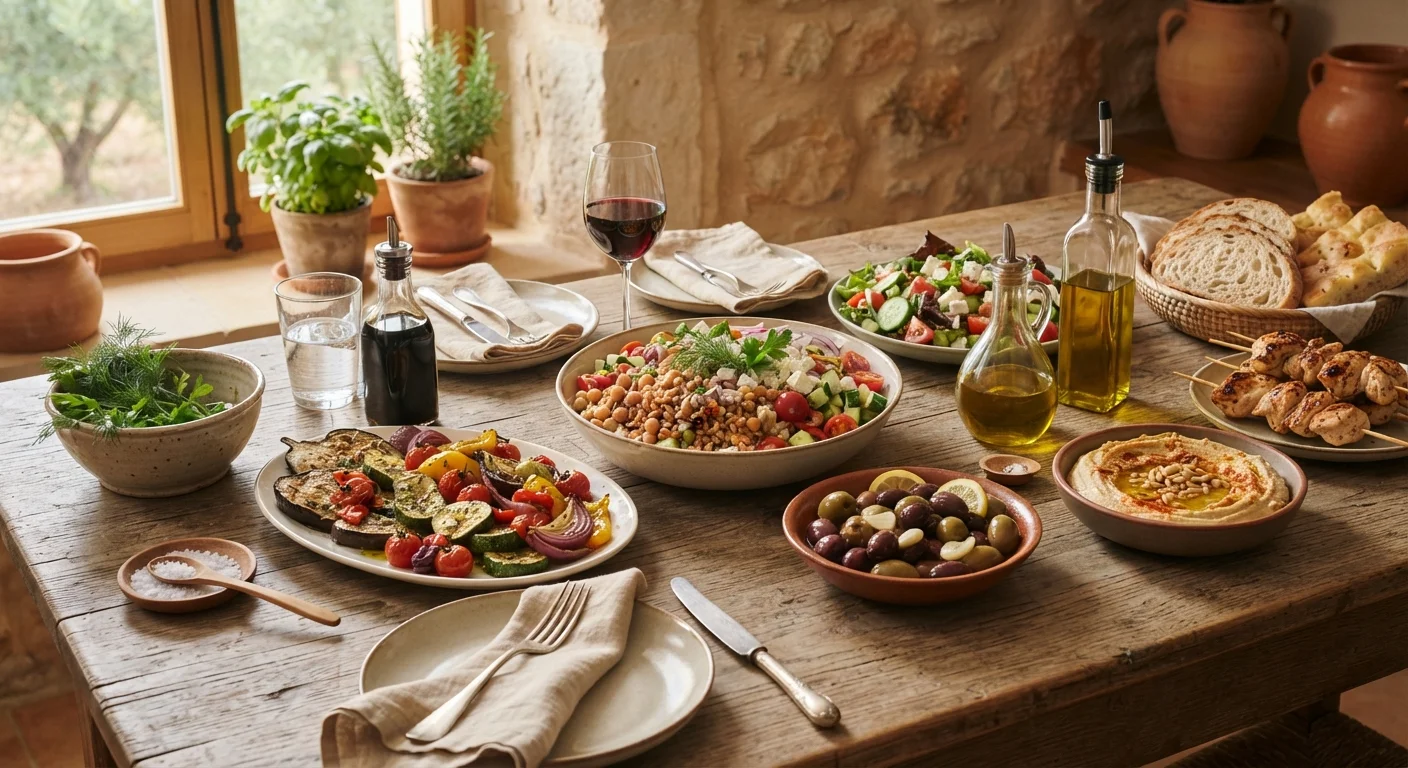
What the Mediterranean Pattern Actually Is
The Mediterranean eating pattern is not a single country's cuisine - it is a broad dietary framework observed across the coastal regions of Southern Europe, North Africa, and the Middle East. Researchers studying populations in Greece, Spain, and Italy during the mid-twentieth century noticed consistently lower rates of cardiovascular disease, and dietary habits emerged as a key variable.
At its core, the pattern emphasizes:
- Abundant vegetables, fruits, and legumes as the daily dietary backbone
- Whole grains such as farro, barley, and whole-wheat bread in place of refined starches
- Olive oil as the primary added fat
- Moderate fish and seafood, typically several times per week
- Limited red and processed meat, eaten occasionally rather than routinely
- Dairy in modest amounts, primarily as yogurt and cheese
- Herbs and spices as primary flavor tools, reducing salt reliance
It is worth noting that alcohol - often mentioned in popular descriptions - is not a required or recommended component. Research in this area involves complex confounding factors, and public health guidelines in the United States do not encourage drinking for health reasons.
See our practical guide to building a balanced plate for a complementary framework that works alongside these principles.
The Evidence Behind the Pattern
The Mediterranean dietary pattern has one of the stronger evidence bases among dietary frameworks studied in nutritional epidemiology. Large observational studies and several randomized controlled trials have examined its associations with health outcomes.
~30%
Reduction in major cardiovascular events
The PREDIMED trial observed approximately a 30% relative risk reduction in major cardiovascular events among high-risk adults following a Mediterranean dietary intervention.
7,400+
Participants in the PREDIMED study
The PREDIMED trial enrolled over 7,400 adults at high cardiovascular risk across multiple Spanish centers, making it one of the largest diet-focused randomized trials.
Top 3
Most studied dietary patterns globally
According to multiple systematic reviews, the Mediterranean pattern consistently ranks among the most extensively researched dietary frameworks in nutritional science.
The PREDIMED trial (Prevención con Dieta Mediterránea), published in the New England Journal of Medicine, is frequently cited. It found associations between a Mediterranean dietary intervention and reduced major cardiovascular events in high-risk adults compared to a low-fat control diet. Researchers have also linked adherence to this pattern with lower markers of inflammation and improved glycemic control in multiple populations.
It is important to acknowledge the limits of nutritional science: most large-scale diet studies rely on self-reported food intake and cannot perfectly isolate diet from lifestyle factors such as activity, sleep, and social eating. The Mediterranean pattern is associated with benefit - not proven to be a cure or guarantee of any specific health outcome.
“No single food or nutrient explains the benefits seen with the Mediterranean diet - it is the overall dietary pattern and its synergistic combination of minimally processed plant foods that appears to matter most.”
— Walter Willett, Professor of Epidemiology and Nutrition, Harvard T.H. Chan School of Public Health
What a Typical Day Looks Like
Translating research into daily practice requires moving beyond lists of approved foods. Here is what a day following this pattern might realistically involve for an American household:
Morning
A bowl of Greek-style yogurt with fresh or frozen fruit and a sprinkle of walnuts. Alternatively, whole-grain toast with mashed avocado or a soft-cooked egg alongside sliced tomato and olive oil.
Midday
A large salad built on leafy greens, cherry tomatoes, cucumber, chickpeas, and crumbled feta, dressed with olive oil and lemon juice. A piece of whole-grain bread on the side. Leftovers from a vegetable-and-lentil soup work equally well.
Dinner
Baked salmon or sardines alongside roasted root vegetables and a small serving of whole-grain pasta or bulgur. A few olives and a handful of nuts as an easy snack earlier in the day round out the pattern.
What these meals share: they are plant-forward, minimally processed, and built around whole-food ingredients rather than packaged convenience items.
Start with one Mediterranean-style meal per day rather than overhauling everything at once. A simple lunch of lentils, leafy greens, and olive oil already captures the pattern's core principles.
Incremental change is more sustainable than wholesale dietary revision, and even partial adherence to this pattern is associated with measurable health signals in observational research.
Keep a jar of cooked or canned legumes in your refrigerator at all times - they can be added to salads, soups, or grain bowls in minutes and dramatically increase daily plant protein and fiber intake.
Legumes are among the most underused foods in American diets despite being a cornerstone of the Mediterranean pattern and a key source of both protein and dietary fiber.
Translating It to an American Kitchen
One persistent misconception is that this eating style requires expensive specialty ingredients. In practice, many of its staples - canned chickpeas, frozen vegetables, canned fish, dried lentils, oats, and seasonal produce - are among the most affordable items in any grocery store.
Affordable Staples to Stock First
Canned chickpeas, dried lentils, canned sardines or tuna, frozen spinach, olive oil, whole-grain pasta, and plain yogurt cover most of the pattern's nutritional territory at low cost. Building from these staples before adding specialty items keeps the approach practical and budget-friendly for most households.
A few practical starting points:
- Replace refined grains gradually. Swap white rice for brown rice or farro in familiar dishes. Whole-grain pasta works in most pasta recipes without altering preparation.
- Use olive oil as a default cooking fat for sautéing, roasting, and salad dressing. Extra-virgin varieties provide the most flavor but any olive oil is a solid choice for everyday cooking.
- Build meals around legumes at least twice a week. Lentil soup, black bean tacos, or hummus with raw vegetables all count.
- Shift protein emphasis toward fish. Canned tuna, canned salmon, and frozen fish fillets make this practical without weekly trips to a fish counter.
For a full strategy on stocking a kitchen in line with your nutrition goals, see our guide on grocery shopping habits that support a more nutritious diet.
Common Misconceptions
Several myths follow the Mediterranean pattern into popular coverage and are worth addressing directly.
"It's just about olive oil and fish."
Fat quality and seafood matter, but they are not the defining features. The pattern's foundation is plant diversity - the volume and variety of vegetables, fruits, and legumes consumed most often.
"Red meat is forbidden."
It is de-emphasized, not eliminated. Traditional dietary patterns in Mediterranean regions included red meat at celebrations and special occasions. The distinction is frequency and portion - not absolute exclusion. This matters for readers who may be concerned that the pattern is incompatible with their cultural food traditions.
"It overlaps with intermittent fasting."
These are distinct approaches. The Mediterranean pattern addresses what you eat; fasting-based approaches focus on when you eat. Our article on intermittent fasting and what the evidence shows covers those trade-offs separately.
"All carbohydrates are fine because pasta is Mediterranean."
Refined carbohydrates appear in much smaller amounts than popular Italian-American cuisine might suggest. Pasta portions in traditional settings were modest, accompanying vegetables and legumes - not the centerpiece of every meal. Readers interested in how different eating patterns handle carbohydrates should also review diet trends that quietly undermine nutritional balance.
Who Should Talk to a Professional First
For most healthy adults, shifting toward more plant-centered, whole-food eating is unlikely to carry significant risk. However, certain groups should consult a qualified healthcare provider or registered dietitian before making substantial dietary changes:
- People managing chronic conditions such as kidney disease, diabetes, or cardiovascular disease
- Those on medications whose absorption or efficacy can be influenced by diet (including blood thinners and certain cholesterol medications)
- Pregnant or breastfeeding individuals
- Children and adolescents with specific growth or nutritional needs
- Anyone with a history of disordered eating
Consult a Professional for Personalized Guidance
The Mediterranean eating pattern is a general health-promoting framework, not individualized medical nutrition therapy. People with chronic health conditions, those on prescription medications, pregnant individuals, and anyone with a history of disordered eating should speak with a registered dietitian or physician before significantly changing their diet. General information cannot substitute for personalized professional advice.
The Mediterranean pattern is a framework, not a prescription. Its value lies in long-term, sustainable dietary habits built around real food - not in strict adherence to a list of permitted items. That flexibility is precisely what makes it a realistic option for most American households willing to make gradual, practical changes. For a broader look at protein choices that fit within this pattern, see our piece on protein sources across eating patterns.
This article is for general informational and educational purposes only and does not constitute medical or nutritional advice. Always consult a qualified healthcare professional or registered dietitian before making significant changes to your diet, especially if you have an existing health condition.