
What PSI Actually Means
PSI - pounds per square inch - is the unit used to measure how much air pressure is inside your tire. Think of it as the tension that keeps your tire properly shaped so it can support the vehicle's weight and respond accurately to steering.
Each vehicle has a specific recommended PSI range, typically somewhere between 30 and 35 PSI for passenger cars, though it varies. The right number for your car is printed on a sticker inside your driver's door jamb. That number is what matters - not the figure stamped on the tire's sidewall, which is that tire's maximum safe limit, not a target.
Many drivers confuse these two numbers. Using the sidewall figure as a guide can lead to overinflation, which carries its own safety risks.
Don't Use the Tire Sidewall Number
The maximum PSI stamped on the side of your tire is a structural limit, not a recommended operating pressure. Always use the number listed on your vehicle's door jamb sticker or owner's manual. Using the sidewall figure as a target can lead to overinflation and reduced traction.
What Happens When Pressure Is Off
Tire pressure affects far more than ride comfort. When tires are underinflated, the rubber flexes more than it should with each rotation. That extra flexing generates heat, accelerates tread wear on the outer edges, and increases rolling resistance - meaning your engine burns more fuel to move the same distance.
Handling also suffers. Underinflated tires respond more sluggishly to steering inputs and take longer to stop. In a panic-braking situation, those extra feet matter.
Overinflation creates the opposite problem. A tire that's too hard has a smaller contact patch with the road, reducing traction. It's also more likely to sustain damage from a sharp impact like a pothole.
~1 PSI
Pressure lost per 10°F temperature drop
A widely cited automotive guideline explains that tires lose roughly 1 PSI for every 10-degree Fahrenheit decrease in ambient temperature.
0.2%
Fuel economy gain per properly inflated PSI
The U.S. Department of Energy estimates that keeping tires properly inflated can improve gas mileage by about 0.5-3%, depending on how far off pressure was.
Both conditions also accelerate uneven wear, meaning you'll replace tires sooner than you should. Maintaining correct pressure is one of the simplest ways to protect your investment in a set of tires. For a broader view of routine ownership costs, see our car maintenance schedule guide.
How Temperature Affects Your Tires
Air expands when it heats up and contracts when it cools. That means your tire pressure changes with the seasons - and even from morning to afternoon on a cold day.
A common rule of thumb: tire pressure drops approximately 1 PSI for every 10°F decrease in outside temperature. In practical terms, if you set your tires to 33 PSI on a 70°F fall afternoon, they could read closer to 30 PSI on a 40°F winter morning - enough to trigger your dashboard warning light and put you into underinflated territory.
This is why monthly checks matter more than a once-a-year habit. Checking pressure during a cold morning before driving - not after the tires have warmed up - gives the most accurate reading relative to the manufacturer's recommendation.
Set a Monthly Reminder
Tie tire pressure checks to something you already do regularly - like paying a monthly bill or the first of the month. Consistent, short checks prevent the gradual pressure loss that most drivers don't notice until they have a blowout or need new tires prematurely.
How to Check and Adjust Tire Pressure
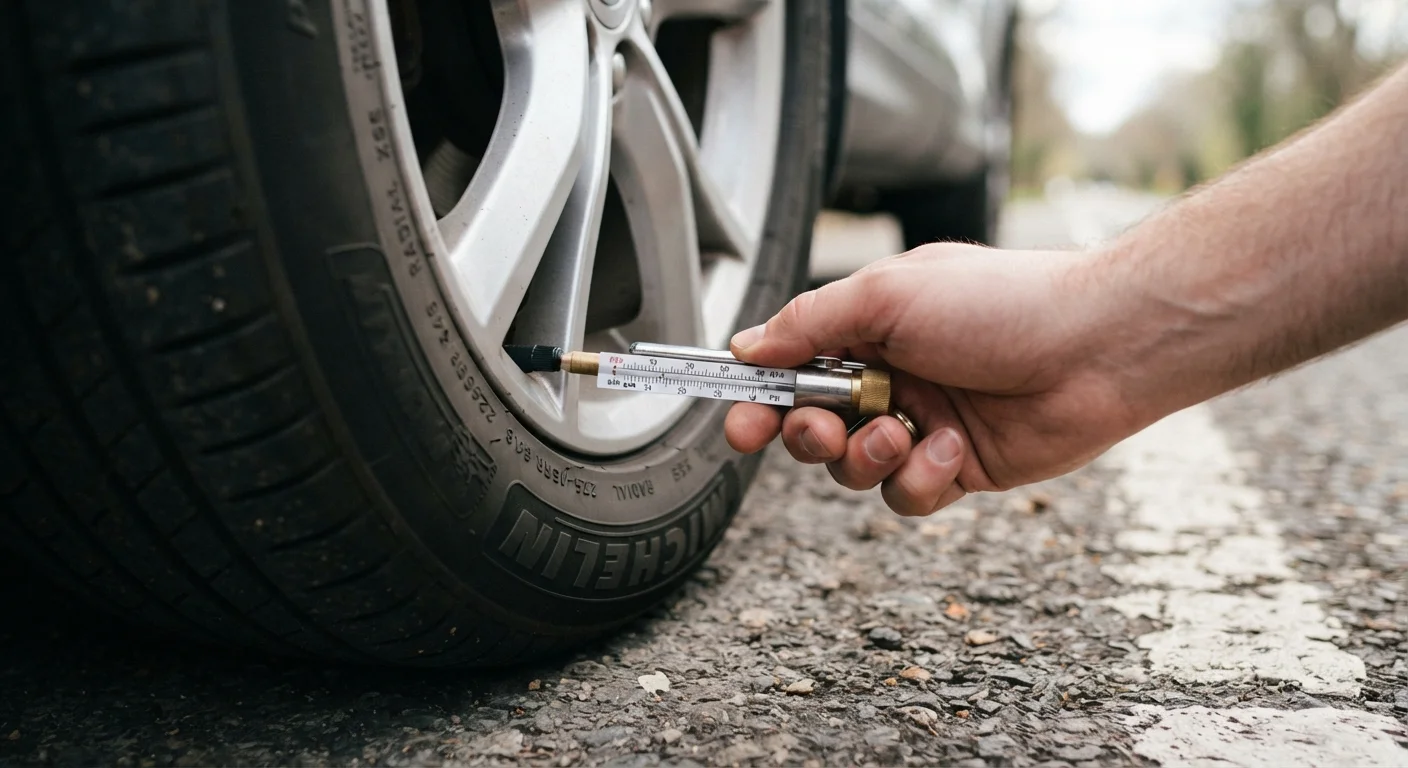
Checking tire pressure is a two-minute task that requires only a basic gauge, available at any auto parts store for a few dollars. Here's the straightforward process:
- Check tires when cold - at least three hours after the car was last driven.
- Remove the small cap from the tire's valve stem (the short rubber or metal nub on the wheel rim).
- Press the gauge firmly onto the valve stem until the hissing stops.
- Read the PSI displayed and compare it to your door jamb sticker.
- Add air at a gas station air pump or home compressor if pressure is low. Release air using the small pin inside the valve stem if pressure is too high.
- Replace the valve cap when done.
It's also worth checking your spare tire periodically. A flat spare is useless in an emergency. Routine tire pressure checks fit naturally alongside other quick inspections you can do yourself - like those covered in our fluid levels check guide.
This article is for general informational purposes. For vehicle-specific guidance, consult your owner's manual or a qualified mechanic.