
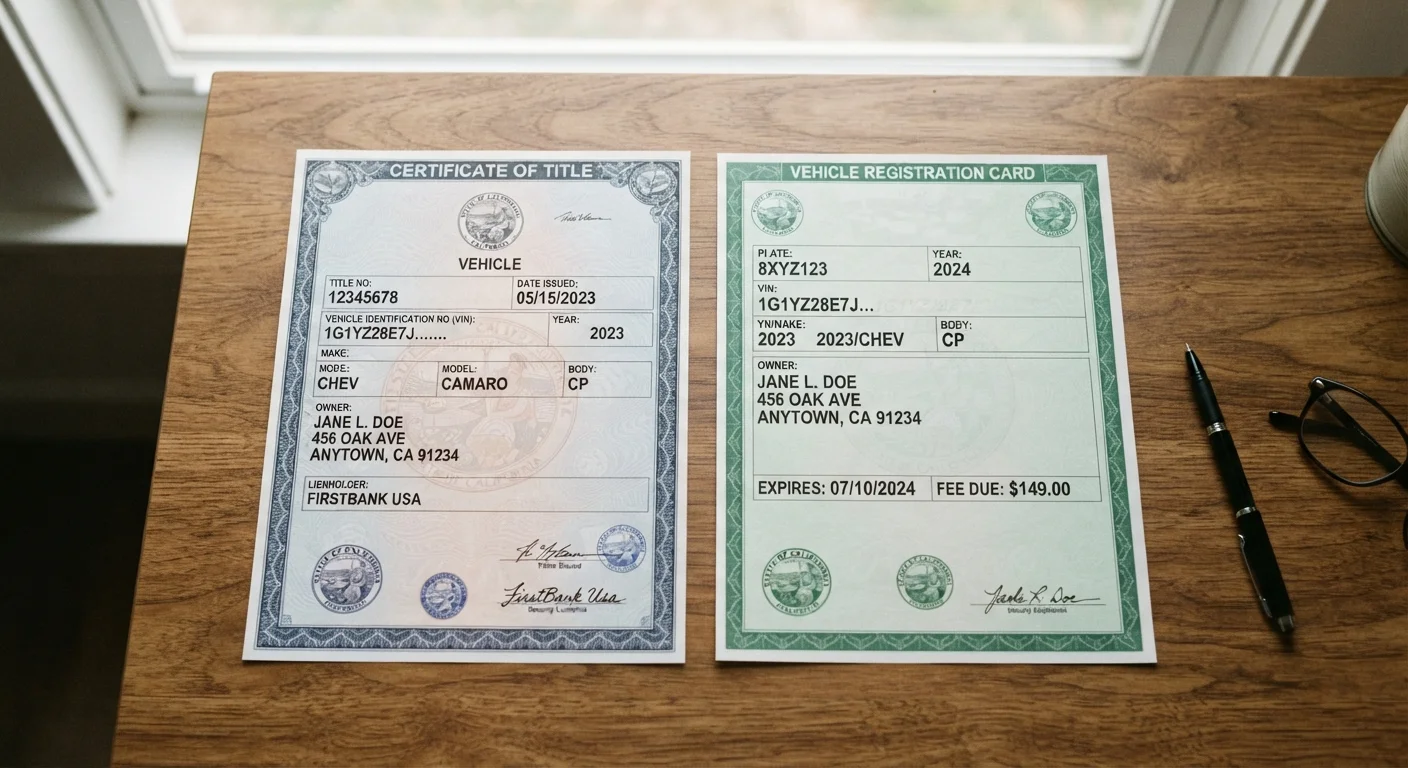
What Each Document Actually Is
When you own a car, two separate documents follow it through its life: the title and the registration. Drivers often confuse the two or assume they're interchangeable - they aren't.
A car title (also called a Certificate of Title) is a legal document issued by your state that identifies who owns the vehicle. It includes the Vehicle Identification Number (VIN), the owner's name and address, and - if there's a loan on the vehicle - the lienholder's information. The title stays with the vehicle across its lifetime and is only transferred when ownership changes hands.
A car registration is a government-issued permit that authorizes a specific person to operate that vehicle on public roads within a given state. It confirms that the vehicle has been recorded in the state's system and that applicable fees and taxes have been paid. Registration typically must be renewed annually or every two years, depending on the state.
Think of it this way: the title proves you own the car; the registration proves you're allowed to drive it.
Key Differences at a Glance
While both documents relate to your vehicle's legal standing, they operate independently and serve distinct purposes. Here's how they compare across the dimensions that matter most to everyday drivers.
| Criterion | Car Title | Car Registration |
|---|---|---|
| Primary purpose | Proves legal ownership | Authorizes road use |
| Issued by | State DMV or equivalent | State DMV or equivalent |
| How often updated | Only when ownership changes | Annually or biennially |
| Keep in vehicle? | No - store securely at home | Yes - required in the vehicle |
| Lienholder listed? | Yes, if loan exists | No |
| Required to sell vehicle? | Yes - must be signed over | No - does not transfer |
| Fees involved | One-time transfer fee | Recurring renewal fees |
For a deeper look at the full registration process - including renewal timelines and what happens if you miss a deadline - see our guide to how vehicle registration works.
When You'll Need Each One
Knowing which document applies to each situation saves time and prevents legal headaches.
You'll need your title when:
- Selling or buying a used vehicle (the seller signs the title over to the buyer)
- Gifting or inheriting a vehicle
- Applying for an auto loan (the lender records a lien on the title)
- Paying off a loan and having the lien released
You'll need your registration when:
- Operating the vehicle on any public road
- Getting pulled over - officers typically ask for registration and proof of insurance
- Renewing annually to keep your plates current
- Passing a vehicle inspection in states that require one
Leased Vehicles Work Differently
If you lease a car, you will not hold the title - the leasing company does, because they legally own the vehicle. You will still be responsible for registering the vehicle and keeping registration current throughout the lease term. For a full breakdown of how leasing changes your ownership responsibilities, see our overview of buying vs. leasing a car.
If you're navigating the broader car-buying process, our walkthrough of the full car-buying arc covers both documents in the context of signing paperwork and driving home legally.
Common Points of Confusion
A few situations trip up even experienced vehicle owners:
Financed vehicles
When you finance a car, the lender holds a lien on the title. Some states physically hold the title at the DMV or mail it to the lender; others issue it to the owner with the lien noted. Either way, you won't receive a clean title until the loan is paid in full. Registration, however, is always in your name from day one.
Moving to a new state
Your title may remain valid temporarily, but most states require you to get a new registration - and often a new title - within a set window after establishing residency. Check your new state's DMV for exact deadlines.
Buying from a private seller
Registration does not transfer with the vehicle. The seller keeps their plates; you apply for new registration in your name after completing the title transfer. Our article on what title transfer actually involves walks through that process step by step.
New owners should also review what every new car owner should know before hitting the road for a broader orientation to ownership responsibilities.
50+
Separate state DMV systems managing titles and registration
Each U.S. state administers its own titling and registration rules, which is why requirements, fees, and deadlines vary significantly across state lines.
30-90 days
Typical window to re-register after moving states
Most states require new residents to transfer their vehicle registration within this range, though the exact deadline differs by jurisdiction.