
More Than a Cosmetic Problem
When owners notice their pet's breath has turned unpleasant, the instinct is often to reach for a dental chew and move on. But persistent bad breath is frequently one of the earliest detectable signs of periodontal disease — an infection that, left unaddressed, quietly destroys the tissues holding teeth in place and can affect organs far from the mouth.
Periodontal disease develops in stages. Plaque — a sticky film of bacteria — forms on tooth surfaces within hours of eating. When plaque mineralizes, it hardens into tartar (also called calculus), which cannot be removed by brushing alone. Bacteria then migrate beneath the gumline, triggering an immune response that inflames and, over time, degrades the gums, periodontal ligament, and supporting bone. By the time most owners notice anything is wrong, significant damage may already have occurred.
This is part of what makes the condition so insidious: pets rarely signal dental pain the way humans do. Animals instinctively mask discomfort, continuing to eat and behave relatively normally even as disease progresses. See our guide to recognizing health changes in pets for broader context on reading your animal's signals.
80%+
Dogs with periodontal disease by age three
According to the American Veterinary Medical Association, the majority of dogs show signs of dental disease by their third year of life.
Stage 1–4
Classification stages of periodontal disease
Veterinary dental specialists use a four-stage grading system; treatment options and outcomes differ substantially across stages.
70%+
Cats affected by dental disease by age three
Feline periodontal disease is similarly prevalent, yet often goes undetected longer due to cats' tendency to mask pain.
How Oral Disease Affects the Whole Body
The connection between oral health and systemic health is well-established in veterinary medicine. When gum tissue is chronically inflamed and infected, oral bacteria can enter the bloodstream — a process called bacteremia. From there, those bacteria can deposit in distant tissues.
Veterinary research has associated severe periodontal disease with microscopic changes in the kidneys, liver, and heart muscle in dogs. The heart valves are of particular concern: bacteria of oral origin have been detected in the lesions of dogs with endocarditis, an infection of the heart's inner lining. While establishing direct causality is complex, the association is taken seriously enough that many cardiologists recommend dental management as part of overall cardiovascular care in at-risk breeds.
Kidney function can also be affected, since the kidneys filter blood continuously and are exposed to any circulating bacteria. For aging pets already managing organ decline, chronic oral infection adds unnecessary stress to systems with limited reserve. Our article on senior pet care addresses why dental health becomes especially important in older animals.
“Dental disease is the most underdiagnosed and undertreated condition we see in companion animals. The mouth is not separate from the rest of the body — what happens there has consequences everywhere.”
— Dr. Jan Bellows, Board-certified veterinary dentist and author on companion animal dental care
What Prevention Actually Looks Like
The good news is that periodontal disease is largely preventable — and when caught early, its progression can be halted. Prevention works on two levels: daily home care and periodic professional care.
Daily Home Care
Tooth brushing remains the gold standard for home dental hygiene. Daily brushing with a soft-bristled pet toothbrush and pet-safe enzymatic toothpaste disrupts plaque before it can mineralize into tartar. Even brushing three to four times per week offers meaningful protection compared to no brushing at all.
For pets that resist brushing entirely, dental rinses, water additives, and Veterinary Oral Health Council (VOHC)-accepted dental chews can provide supplementary support — though none fully replicate the mechanical action of brushing. These are adjuncts, not replacements.
Starting a Tooth-Brushing Routine
Introduce brushing gradually by letting your pet sniff and lick the toothpaste first, then progress to gentle gum rubbing with your finger, and finally to a soft brush. Keep sessions short and reward with praise. Consistency matters more than perfection — even a few minutes several times a week makes a meaningful difference.
Professional Dental Cleanings
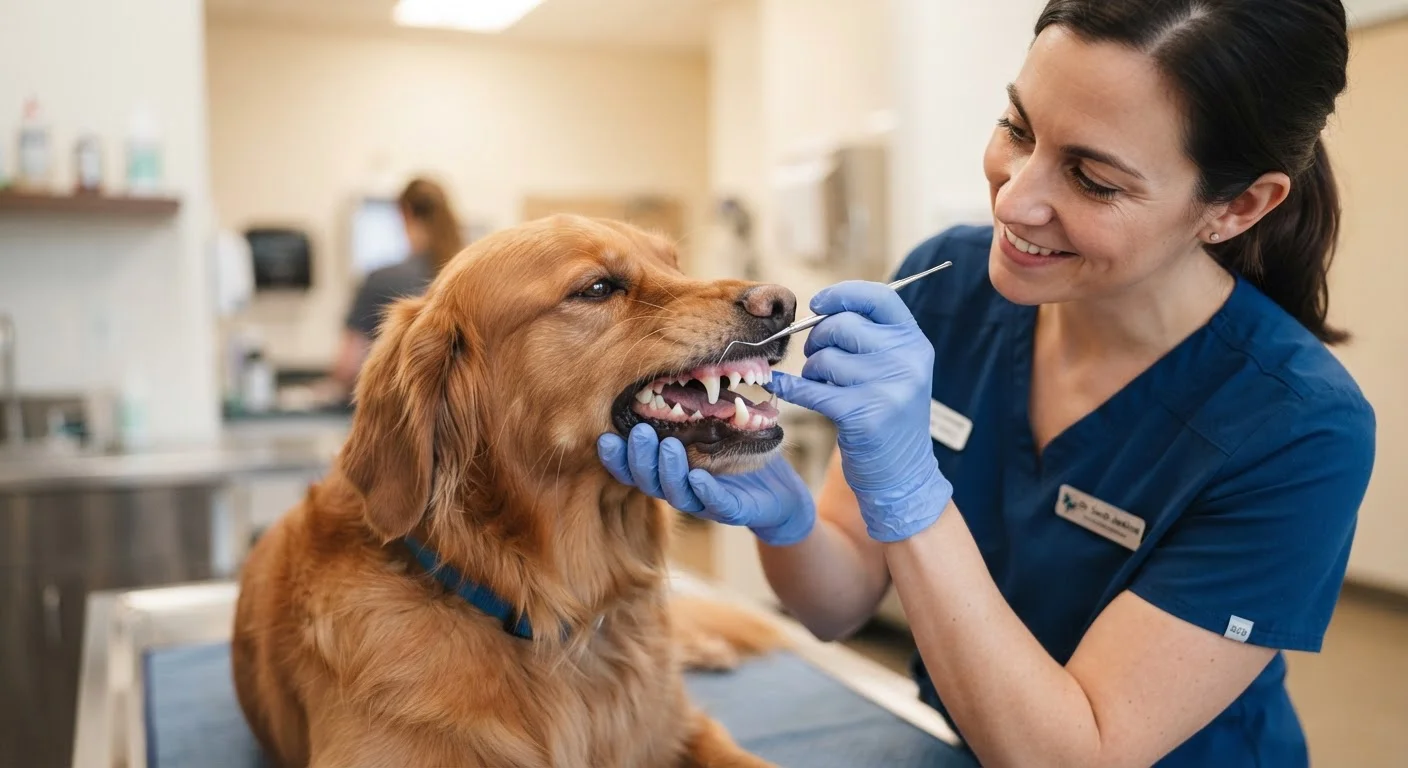
Home care can slow plaque accumulation but cannot address tartar already present or disease below the gumline. Professional cleanings performed under general anesthesia allow veterinarians to scale both above and below the gumline, probe for periodontal pockets, take dental radiographs, and extract teeth that are no longer viable. Anesthesia is necessary to do this safely and thoroughly — it also keeps the pet calm and free from stress during what would otherwise be an uncomfortable procedure.
Incorporating dental checkups into your annual pet health routine helps catch early-stage disease before it requires more invasive treatment.
Breed, Size, and Individual Risk Factors
Not all pets face equal dental risk. Small and toy dog breeds — such as Chihuahuas, Yorkshire Terriers, and Dachshunds — are disproportionately affected by periodontal disease. Their teeth are often crowded into smaller jaws, creating pockets where plaque accumulates rapidly. Brachycephalic breeds (those with flattened faces, like Pugs and Bulldogs) also face structural challenges that increase dental vulnerability.
Cats are not exempt. Feline dental disease includes not only periodontitis but also a painful condition called feline tooth resorption, in which the tooth structure breaks down from within. Signs are often subtle until the condition is severe.
Age is a consistent risk factor across species. As pets get older, years of plaque accumulation take a toll, and immune response to infection may be less robust. Diet, genetics, and chewing behavior also play roles. Your veterinarian can help identify your individual pet's risk profile and recommend a monitoring and cleaning schedule accordingly. Good grooming habits, including regular oral checks at home, support early detection.
This article is for general informational purposes only and does not constitute veterinary medical advice. Always consult a licensed veterinarian for guidance specific to your pet's health needs.