More Than a Headline Number
When inflation appears on the news, it's usually represented as a single percentage — the annual rate at which prices have risen. But that number is an average across hundreds of categories, and your personal experience of inflation depends heavily on what you actually buy.
Rent, groceries, gasoline, prescription drugs, and child care don't all move in the same direction at the same speed. Someone who owns their home outright and drives rarely will feel a high-energy-cost inflation cycle very differently from a renter with a long daily commute. Understanding this is the first step to connecting the headline figure to your own household budget.
For a plain-language breakdown of related financial concepts, see our everyday budgeting glossary, which defines terms like discretionary spending and net income in plain terms.
2%
Federal Reserve's long-run inflation target
The Federal Reserve has set an average 2% annual inflation rate as its long-run target, considering it consistent with price stability and healthy economic growth.
~34%
Cumulative price increase over 10 years at 3% inflation
At a sustained 3% annual inflation rate, the general price level rises by roughly 34% over a decade, illustrating how modest annual increases compound significantly over time.
60%+
Share of CPI basket from housing, food, and transportation
According to the Bureau of Labor Statistics, housing, food, and transportation together represent more than 60% of the Consumer Price Index weighting, reflecting their outsized role in household budgets.
How Purchasing Power Erodes Over Time
Purchasing power is the real-world quantity of goods or services a dollar can buy. When inflation runs at 3% annually, something that costs $100 today will cost roughly $103 next year. That sounds modest — but compounded over a decade, the same item approaches $134. Your dollar does not disappear, but its reach quietly shrinks.
This compounding effect is why financial educators often stress keeping savings in vehicles that at least keep pace with inflation, rather than letting cash sit idle. General financial information — not personalized advice — suggests that understanding the gap between nominal returns (the stated rate) and real returns (after inflation) is a foundational literacy skill.
“Inflation is the one form of taxation that can be imposed without legislation. It erodes the value of savings and fixed incomes in ways that are often invisible to those experiencing it until well after the fact.”
— Milton Friedman, Nobel Prize-winning economist and monetary theory scholar
Inflation also interacts with wages. If your paycheck grows by 2% while prices rise by 4%, your real income has declined even though your nominal salary went up. This real-wage erosion is one reason consumers often feel financially squeezed during periods of above-average inflation even when employment is strong.
Where You're Likely to Feel It First
Inflation tends to show up most visibly in the categories consumers buy most frequently: food, fuel, and housing. These essentials carry heavy psychological weight because they're purchased repeatedly, making price increases impossible to ignore.
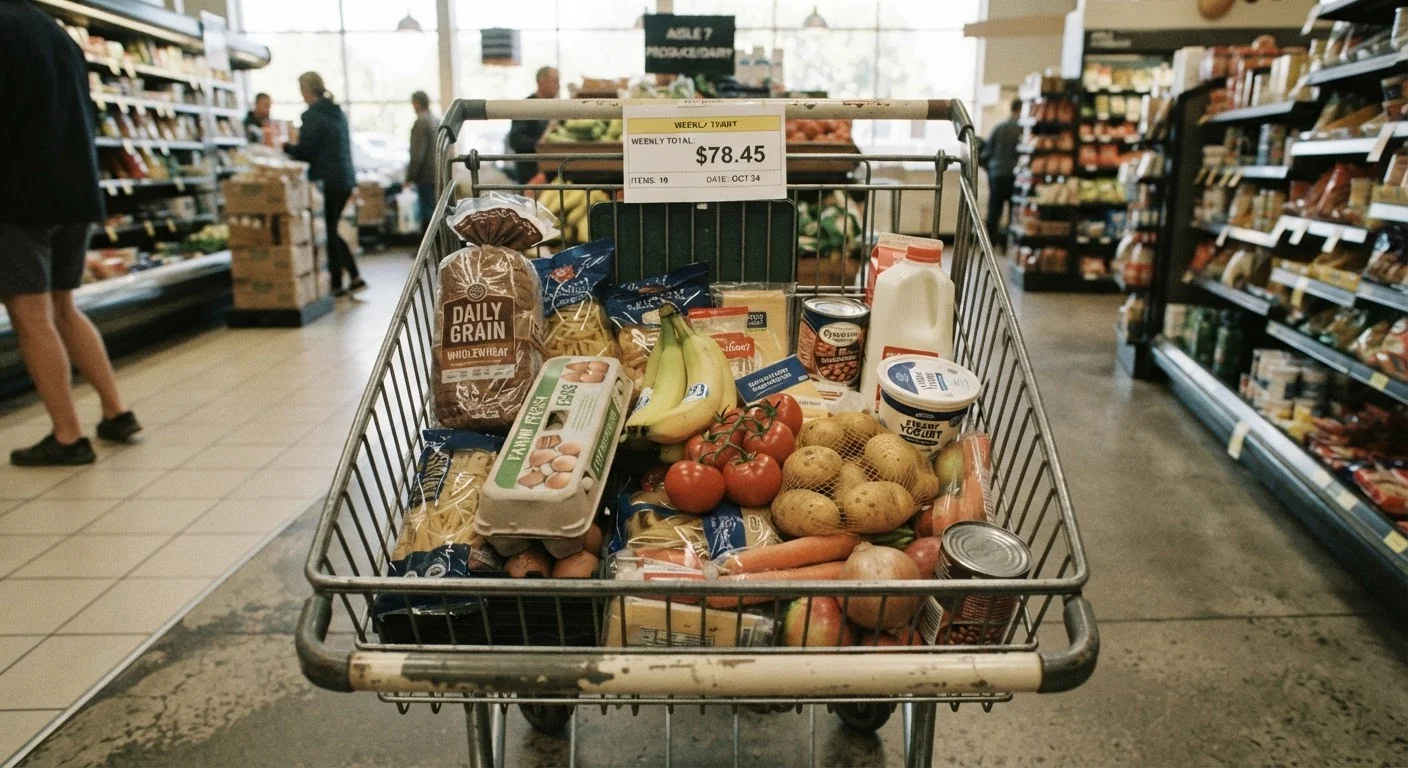
Groceries are a particularly sensitive category. A small increase in the cost of eggs or cooking oil registers immediately because you buy them weekly. This is also where tactics like reading unit price labels become more valuable — they help you compare the real cost of products when package sizes and weights vary.
Shrinkflation adds another layer of complexity. Manufacturers sometimes respond to input-cost pressure by reducing package size rather than raising the sticker price. The cost-per-ounce goes up; the price tag stays the same. Being alert to this kind of hidden price movement is a practical consumer skill.
On the spending categories most budgets overlook, subscription services and annual fees also accumulate quietly — and they tend to raise their rates during inflationary periods, compounding the pressure on monthly cash flow.
Track Your Personal Inflation Rate
The official CPI reflects a national average, but your actual experience of inflation depends on your specific spending mix. Consider tracking the prices of the 10–15 items you buy most regularly over several months. This gives you a clearer picture of how rising prices are affecting your household specifically, rather than relying solely on headline figures.
Framing Value Differently During Inflationary Periods
When prices are rising, how you define value in a purchase matters more than usual. Choosing a lower sticker price isn't always the same as choosing the better financial outcome. A more durable item at a higher upfront cost can outperform a cheaper alternative that needs to be replaced sooner. Our article on cost per use explores this framework in depth.
More broadly, inflation is a useful prompt to revisit your household budget — not just the totals, but the category breakdown. Expenses that were manageable two years ago may now be consuming a larger share of take-home pay, not because spending habits changed but because prices did.
For a deeper look at how to weigh cost, quality, and personal fit together, see what value really means when you're deciding what to buy.
This article is for general informational and educational purposes only and does not constitute personalized financial, tax, investment, or legal advice. Consult a licensed financial professional for guidance specific to your situation.