
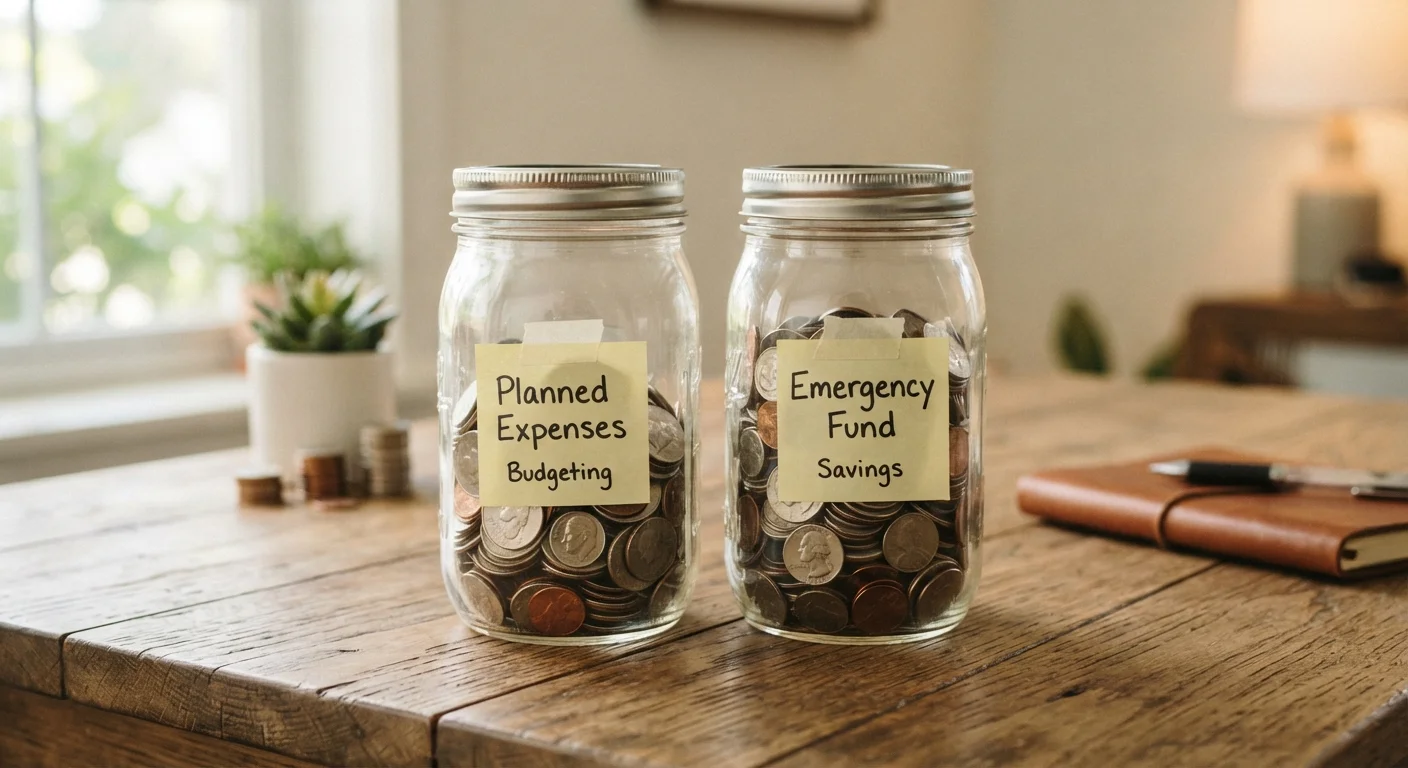
What Makes These Two Savings Tools Different
Both sinking funds and emergency funds involve setting money aside — but that's where the similarity ends. Their purpose, funding cadence, and how you spend them differ fundamentally.
A sinking fund is a savings bucket you fill intentionally for a specific, known expense. You know the cost is coming; you simply spread payments over time so the full amount doesn't hit your budget at once. Common sinking fund categories include car maintenance, vacation travel, back-to-school shopping, home repairs, and annual insurance premiums.
An emergency fund exists for the unexpected — a sudden job loss, an unplanned medical bill, or a major appliance failure that can't wait. Its defining characteristic is that you don't know when or whether you'll need it. It sits in reserve, providing a cushion that keeps a financial setback from becoming a financial crisis.
Understanding this distinction matters because the two funds behave differently in practice. Sinking funds are cycled: you save toward a goal, spend the money, then refill. Emergency funds are largely untouched, growing steadily and deployed only when there's no other reasonable option. See why an emergency fund works differently than a savings goal for a deeper look at that logic.
| Criterion | Sinking Fund | Emergency Fund |
|---|---|---|
| Purpose | Planned, predictable future expenses | Unplanned, unexpected financial shocks |
| Examples | Vacation, car repairs, annual premiums | Job loss, surprise medical bills, urgent repairs |
| Spending pattern | Spent and refilled on a cycle | Rarely touched; preserved as a reserve |
| Sizing method | Known cost ÷ months until due | 3–6+ months of essential living expenses |
| Priority order | Secondary — build alongside emergency fund | Primary — build a starter fund first |
| Number of accounts | Often multiple (one per goal category) | Typically one dedicated account |
How to Build and Manage Each Fund
The mechanics of each fund require different thinking — both in how you size them and how you treat withdrawals.
Sizing a Sinking Fund
Start by identifying predictable large expenses over the next 12 months. Divide each expected total by the number of months until it's due, and set that amount aside monthly. For example, if your car registration costs $360 and is due in six months, you'd contribute $60 per month to that sinking fund category.
Sizing an Emergency Fund
The conventional starting benchmark is three to six months of essential living expenses — rent or mortgage, utilities, groceries, minimum debt payments, and transportation. This is a floor, not necessarily a ceiling, especially for those with variable income or single-income households. For more on realistic sizing, see why three months of expenses is a floor, not a goal.
Where to Keep Each
Both funds work best in accounts that are accessible but slightly separate from your everyday checking. High-yield savings accounts are a common choice. Some savers prefer keeping multiple labeled sub-accounts — one for emergencies, others for individual sinking fund categories. Comparing checking and savings account options can help you choose the right structure.
~57%
Americans unable to cover a $1,000 emergency
A Bankrate survey found that fewer than half of U.S. adults could pay a $1,000 unexpected expense from savings alone.
3–6 months
Recommended emergency fund coverage
Financial planning guidance broadly recommends covering three to six months of essential expenses, though the right amount varies by household situation.
Automation is one of the most reliable ways to keep both funds on track. Scheduling recurring transfers on payday removes the temptation to spend first and save later. Automating your savings without losing flexibility covers how to set this up in a way that accommodates variable income and irregular expenses.
Common Mistakes That Undermine Both Strategies
The most frequent error is treating sinking funds and emergency funds as interchangeable. Pulling from your emergency fund to cover a vacation you knew was coming — and could have planned for — erodes the safety net it's meant to provide. Conversely, dipping into a sinking fund earmarked for car repairs to cover an actual emergency means the repair bill later goes unpaid or lands on a credit card.
A second mistake is building only one or the other. An emergency fund without sinking funds means predictable large expenses keep disrupting your monthly budget. Sinking funds without an emergency fund means one unexpected event can unravel your entire financial plan.
If you're weighing whether to redirect savings toward paying down debt instead, that's a legitimate tradeoff to examine carefully. Before you drain your savings to pay off debt, consider this outlines the key considerations. Maintaining at least a small emergency reserve while tackling debt is generally advisable for most households.
Both tools work best when they're part of a broader budgeting framework. If you haven't already mapped out your monthly income and expenses, budgeting basics is a useful starting point for building that foundation.
This article is for general informational purposes only and does not constitute personalized financial advice. Consult a licensed financial professional for guidance tailored to your individual circumstances.