
How Dollar-Cost Averaging Works in Practice
The mechanics of dollar-cost averaging are straightforward. Suppose you commit to investing $200 every month into a broad market index fund. In January, shares cost $50 each — you buy 4 shares. In February, the price drops to $40 — your $200 now buys 5 shares. In March, the price rises to $80 — you buy 2.5 shares.
After three months you've invested $600 and hold 11.5 shares. Your average cost per share is roughly $52.17, even though prices ranged from $40 to $80. A single lump-sum purchase at January's $50 price would have yielded exactly 12 shares — a comparable result, but only if you happened to invest at exactly that price point. The DCA investor didn't need to guess when to enter.
This mechanic — buying more when prices are low, less when they're high — is sometimes called automatic value averaging, though the two strategies are technically distinct. The key point is that DCA removes the guesswork of choosing an optimal entry price.
~58%
U.S. workers with access to a workplace retirement plan
According to the U.S. Bureau of Labor Statistics, roughly 58% of civilian workers had access to employer-sponsored retirement plans as of recent surveys — most of which use automatic payroll deductions, a built-in form of DCA.
2/3
Lump-sum investing outperforms DCA historically
Vanguard research has found that investing a lump sum immediately outperformed a 12-month DCA strategy approximately two-thirds of the time across U.S., U.K., and Australian markets, reflecting the long-term upward bias of diversified equity markets.
The Behavioral Logic: Why Consistency Beats Prediction
No reliable method exists for consistently predicting short-term market movements — not for individual investors, and often not for professionals either. DCA sidesteps this problem entirely by making the timing decision irrelevant. You invest on schedule, period.
This matters because emotional decision-making is one of the most documented sources of poor investment outcomes. Investors who wait for the market to 'settle down' often miss recoveries. Those who invest large sums in a single moment of optimism can be exposed to immediate downturns. DCA replaces both impulses with a rule-based routine.
“The investor's chief problem — and even his worst enemy — is likely to be himself. In the end, how your investments behave is much less important than how you behave.”
— Benjamin Graham, Economist and author of The Intelligent Investor
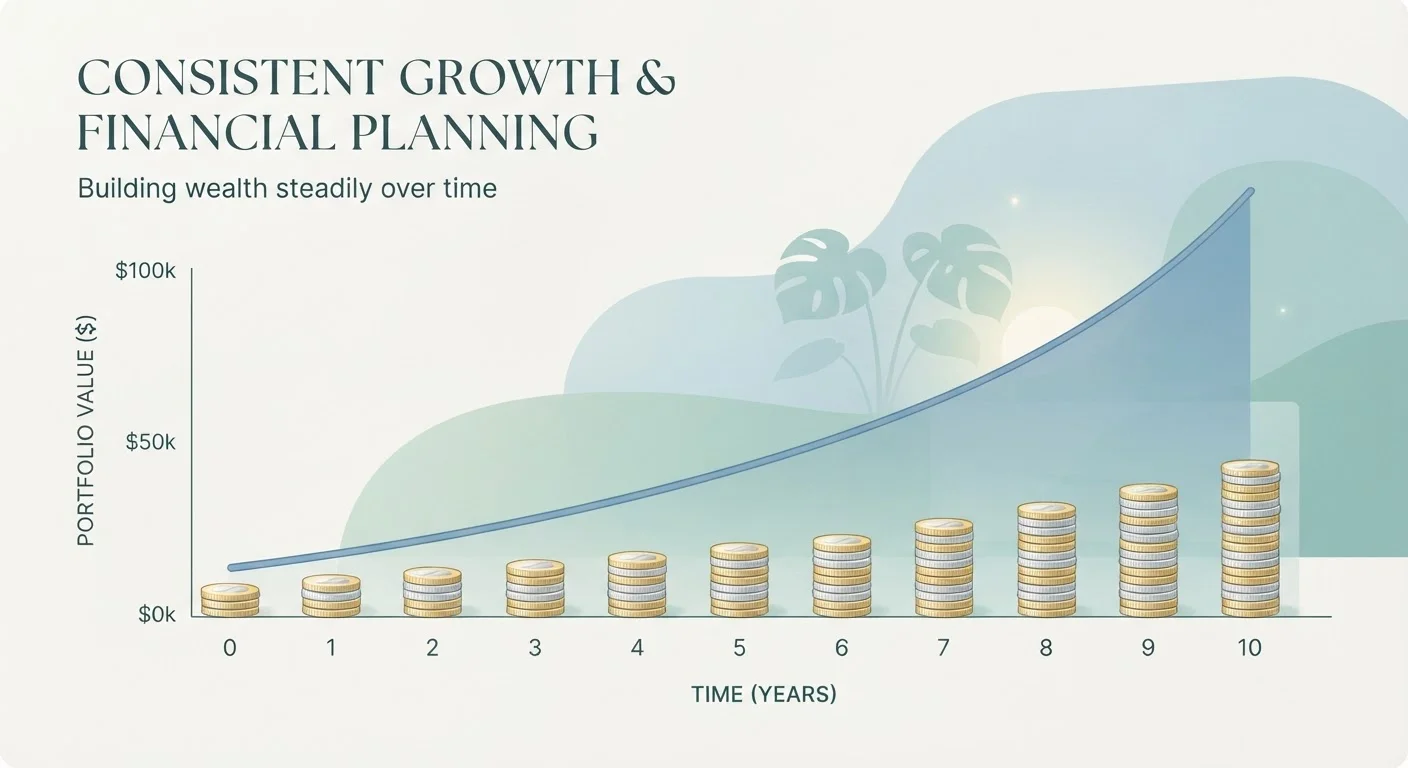
The habit-building dimension of DCA is also underappreciated. Regular, fixed contributions mirror the discipline of building a savings habit — small, consistent actions that compound into meaningful results over time. Automating the contribution, as discussed in strategies for automating your savings, makes DCA even easier to sustain.
Real-World Examples of Dollar-Cost Averaging
DCA is not an abstract concept reserved for sophisticated investors — it appears in everyday financial life in recognizable forms.
Limitations and Honest Caveats
Dollar-cost averaging is a useful framework, but it is not a guarantee of success and carries real limitations worth understanding.
- It doesn't prevent losses. If an asset declines persistently and never recovers, DCA simply means you bought more of a losing investment over time.
- Lump-sum investing often outperforms in rising markets. When markets trend upward over long periods — as they historically have for broad diversified indexes — investing a large amount earlier typically yields more than spreading it out. DCA sacrifices some potential return in exchange for reduced timing risk.
- Transaction costs can add up. Frequent small investments may incur higher cumulative fees, though many modern platforms have eliminated per-transaction costs on certain products.
- It requires discipline to maintain. The strategy only works if you keep contributing during market downturns — precisely when the instinct to stop is strongest.
Automate to Stay Consistent
The most effective way to practice dollar-cost averaging is to automate contributions so they happen without any manual action required. Set a recurring transfer from your checking account or elect a payroll deduction in your employer plan. Automation removes the temptation to skip a contribution during market volatility — which is precisely when continuing to invest matters most.
As with any investment strategy, DCA works differently depending on the asset chosen, time horizon, contribution amount, and the account in which it's held. This article provides general financial education, not personalized investment advice. Consider speaking with a licensed financial adviser to understand how any strategy fits your specific situation.
This article is for informational purposes only and does not constitute personalized financial or investment advice. Investing involves risk, including the potential loss of principal. Consult a qualified financial professional before making investment decisions.