
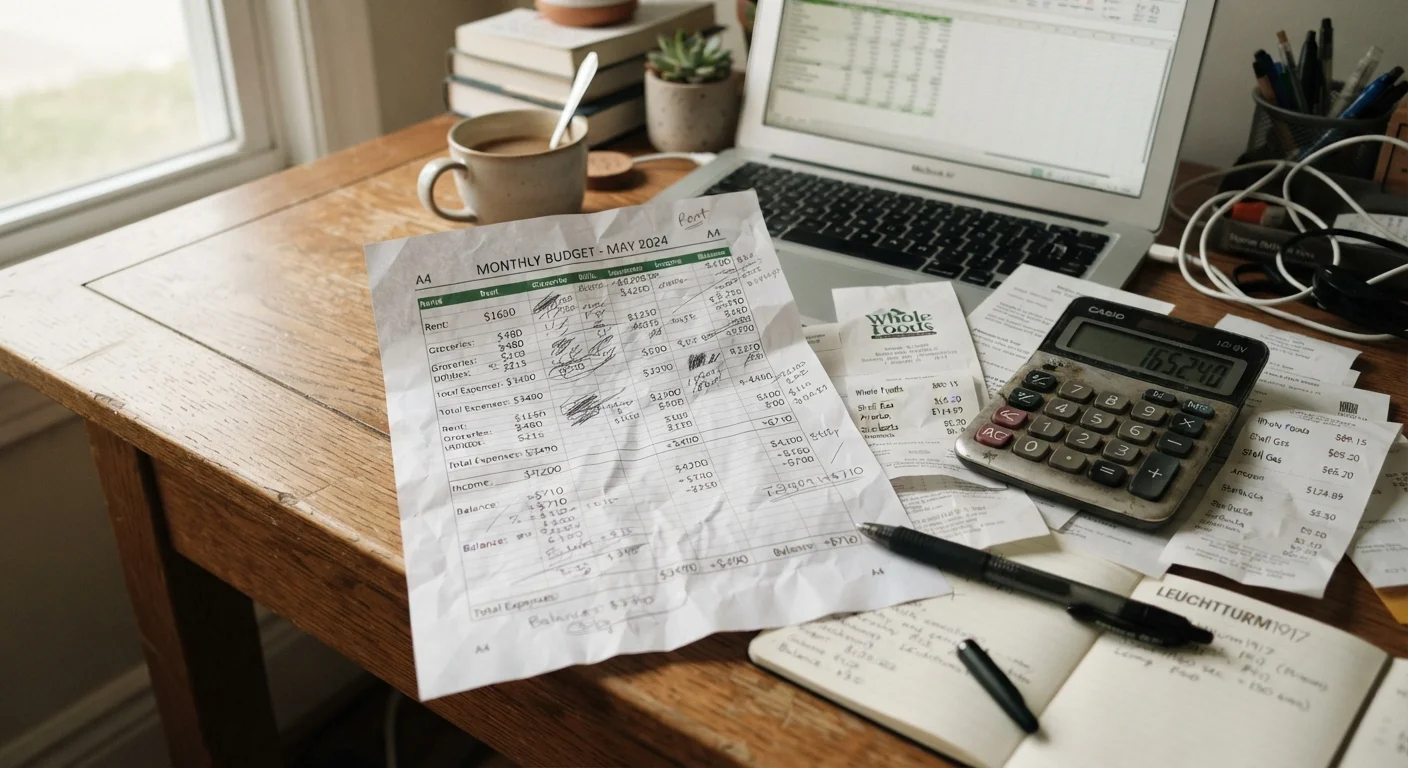
The Real Reason First Budgets Collapse
Most people who try budgeting for the first time don't fail because they lack discipline. They fail because the budget itself was built on faulty assumptions. A plan that doesn't reflect real life won't survive contact with it — and the first month is where that gap becomes obvious.
Understanding why budgets break down early is the most direct path to building one that actually lasts. The mistakes below are common, predictable, and — once you know them — largely preventable. If you're starting from scratch, the foundational guide to household budgeting is a useful companion alongside this article.
Building the budget from memory instead of actual spending data.
Why it happens: Most people believe they have a reasonable mental picture of where their money goes — but memory systematically underweights small, frequent purchases like coffee, subscriptions, and convenience spending.
Forgetting irregular and infrequent expenses entirely.
Why it happens: A monthly budget naturally focuses on monthly bills, but annual costs — car registration, insurance premiums, holiday gifts, medical copays — don't appear in a typical month and get left out.
Setting spending limits so tight that any deviation feels like failure.
Why it happens: New budgeters often aim for an idealized version of their spending rather than a realistic one, motivated by the desire to cut aggressively and save fast.
Treating a budget as a one-time document rather than a living plan.
Why it happens: The effort of building the initial budget can create the impression that the work is done. In reality, income, expenses, and priorities shift constantly.
Not accounting for the social and emotional dimensions of spending.
Why it happens: Budgets are often built as pure math exercises, ignoring the fact that spending is tied to habits, social situations, stress responses, and identity — none of which disappear because a spreadsheet says they should.
How to Set Your Budget Up for a Second Month
Surviving the first month isn't the goal — building a system that improves over time is. After any budget attempt, even a failed one, you have real data. Look at where you overspent, where your estimates were off, and which categories you forgot entirely. That information is the most valuable input you can have for round two.
~1 in 3
Americans without a household budget
Surveys conducted by the National Financial Educators Council and similar organizations consistently find that a substantial share of U.S. households do not use a formal budget to manage spending.
4–6 weeks
Typical time before a new budget is abandoned
Financial counselors frequently observe that the majority of first-time budgeters stop tracking within the first month or two, often citing unrealistic expectations as the primary reason.
Budgeting also carries genuine limits worth understanding. It won't solve an income problem on its own, and it can't predict every financial curveball. The balanced look at what budgeting can and cannot do is worth reading before you over-invest in perfecting a plan. Likewise, before you focus entirely on spending cuts, make sure you have the foundation of an emergency fund in place — without one, a single unexpected expense can unravel months of budgeting progress.
For the practical setup work, the monthly budget setup checklist walks through every step before the month begins. And if you're ready to think beyond the first 30 days, habits that keep a budget working long-term covers what separates budgets that stick from those that fade.
This article is for general informational and educational purposes only and does not constitute personalized financial advice. Consider consulting a qualified financial professional for guidance specific to your circumstances.