How Free Trial Conversion Actually Works
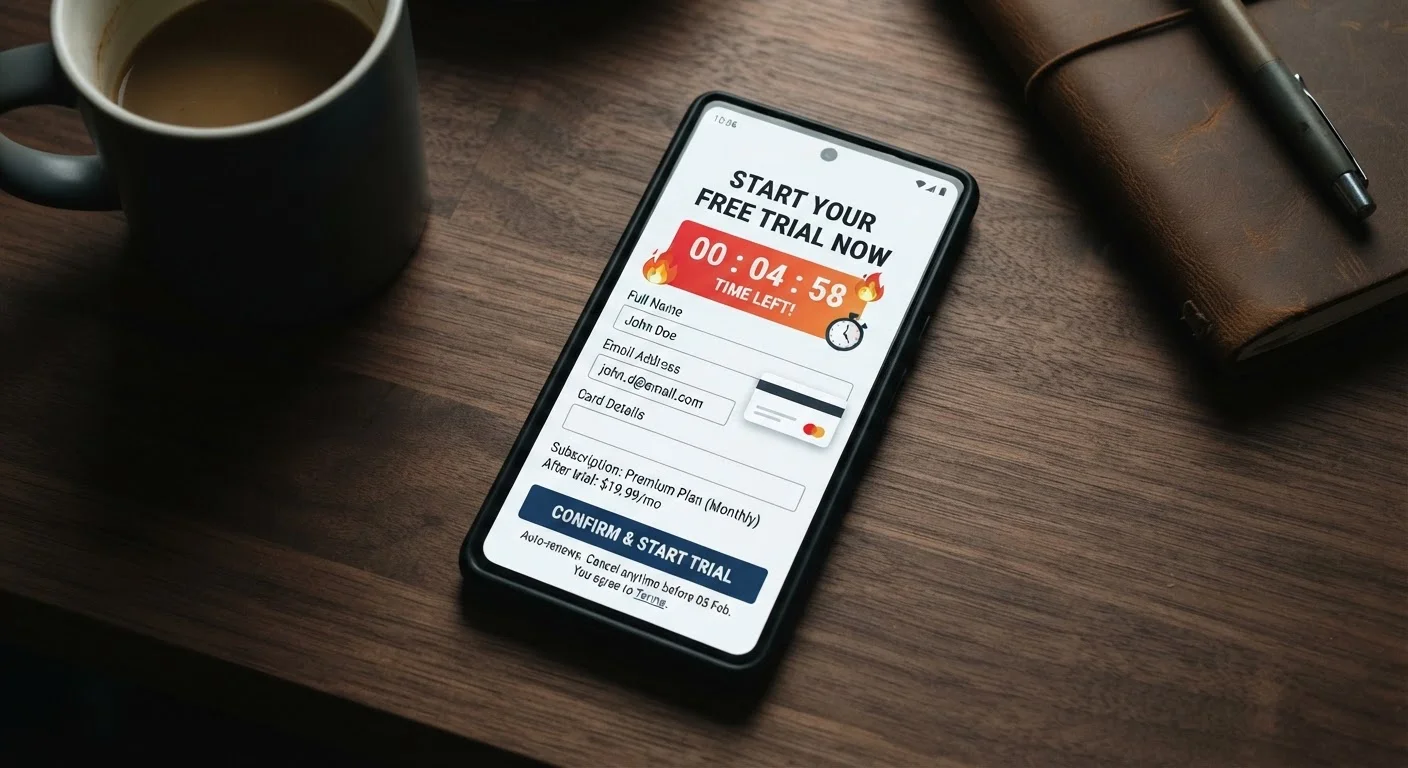
A free trial is a marketing mechanism, not a gift. When you enter payment details to access a trial, you are authorizing future charges unless you affirmatively cancel before a set deadline. The service stores your billing information and initiates the first payment automatically when the trial window closes - often at midnight on the final day.
This model is legal and disclosed, but the disclosure is frequently buried. Terms like "after your 14-day trial, you'll be charged $12.99/month" may appear in light gray text below the sign-up button, or inside a collapsed FAQ section. Regulators in the U.S. have taken action against companies that obscure these terms, but the practice remains common enough that consumer awareness is the most reliable safeguard.
Understanding this dynamic doesn't require distrust of every service - many legitimate companies offer genuine value through subscription plans. The goal is to enter any trial as an informed participant, not a passive one. For a broader look at how these costs can compound, the Budgeting Basics hub has practical guidance on tracking recurring expenses.
Mistakes That Lead to Unwanted Charges
The errors most consumers make aren't careless - they're the predictable result of sign-up flows engineered to minimize friction and maximize conversions. Recognizing the specific patterns makes them much easier to sidestep.
Entering payment details without reading the trial terms.
Why it happens: Sign-up flows are often designed to move quickly, and billing terms are typically displayed in small text away from the main call-to-action button.
Assuming a reminder email will arrive before the trial converts.
Why it happens: Many consumers expect the same courtesy that subscription boxes or gyms might offer, but most digital services provide no pre-charge notification by default.
Ignoring pre-checked boxes during the sign-up process.
Why it happens: Multi-step registration flows often include opt-in checkboxes for add-ons, upgrades, or partner offers that are checked by default - easy to miss when you're focused on completing the form.
Forgetting to cancel before the trial window closes.
Why it happens: Trial periods are frequently set at awkward lengths - seven, ten, or fourteen days - that don't align with natural calendar checkpoints, making them easy to lose track of.
Using a primary debit card for free trial sign-ups.
Why it happens: It's the most convenient card available, and users don't always consider the risk of an unexpected charge hitting a bank account directly.
Never auditing active subscriptions on bank or card statements.
Why it happens: Small recurring charges - often $5 to $15 - are easy to overlook on a busy statement, especially if the merchant name differs from the service name you remember signing up for.
Cancellation Doesn't Always Mean Immediate Access Ends
Some services continue charging you through the current billing period even after you cancel. Others require cancellation through a specific channel - such as a phone call rather than an online form - and won't honor digital requests. Read the cancellation policy before signing up, not after you've already been charged.
If you're evaluating whether a subscription service is worth keeping after the trial, it helps to weigh it honestly against similar options - the article Subscription Boxes: Convenience vs. Creeping Cost offers a balanced framework for that kind of assessment.
Protecting Yourself Before and After Sign-Up
Your Card Is Charged Without Warning
Most subscription services are not required to send a reminder before converting a free trial to a paid plan. Once your payment details are on file, the charge can happen automatically and silently. Always assume the trial will convert - and plan accordingly - rather than waiting for a notification that may never arrive.
A few consistent habits significantly reduce the risk of being caught off guard by trial conversions. First, treat every free trial as a short-term financial commitment with an expiration date - because that's exactly what it is. Second, take thirty seconds after signing up to screenshot or copy the terms and any confirmation email that states the trial end date and billing amount.
Third, periodically audit what's actually being charged to your accounts. Subscription costs are one of the spending categories most household budgets overlook, and small monthly charges from forgotten trials can quietly add up over a year. The Smart Shopping Tips section has additional strategies for keeping everyday spending under control.
42%
Consumers unaware of all their active subscriptions
A 2022 survey by C+R Research found that roughly 42% of respondents had forgotten about at least one active subscription they were still being charged for.
$219/yr
Average amount lost to unwanted subscriptions
The same C+R Research survey estimated the average consumer loses approximately $219 annually to subscriptions they no longer use or didn't intend to keep.
Finally, if you do get charged unexpectedly, contact the service directly first - many will issue a refund for a single billing cycle, particularly if you haven't used the service since the trial ended. If that doesn't resolve the issue, your card issuer's dispute process is the next step.
This article is for general informational purposes only and does not constitute financial or legal advice. Consult a qualified professional for guidance specific to your situation.