
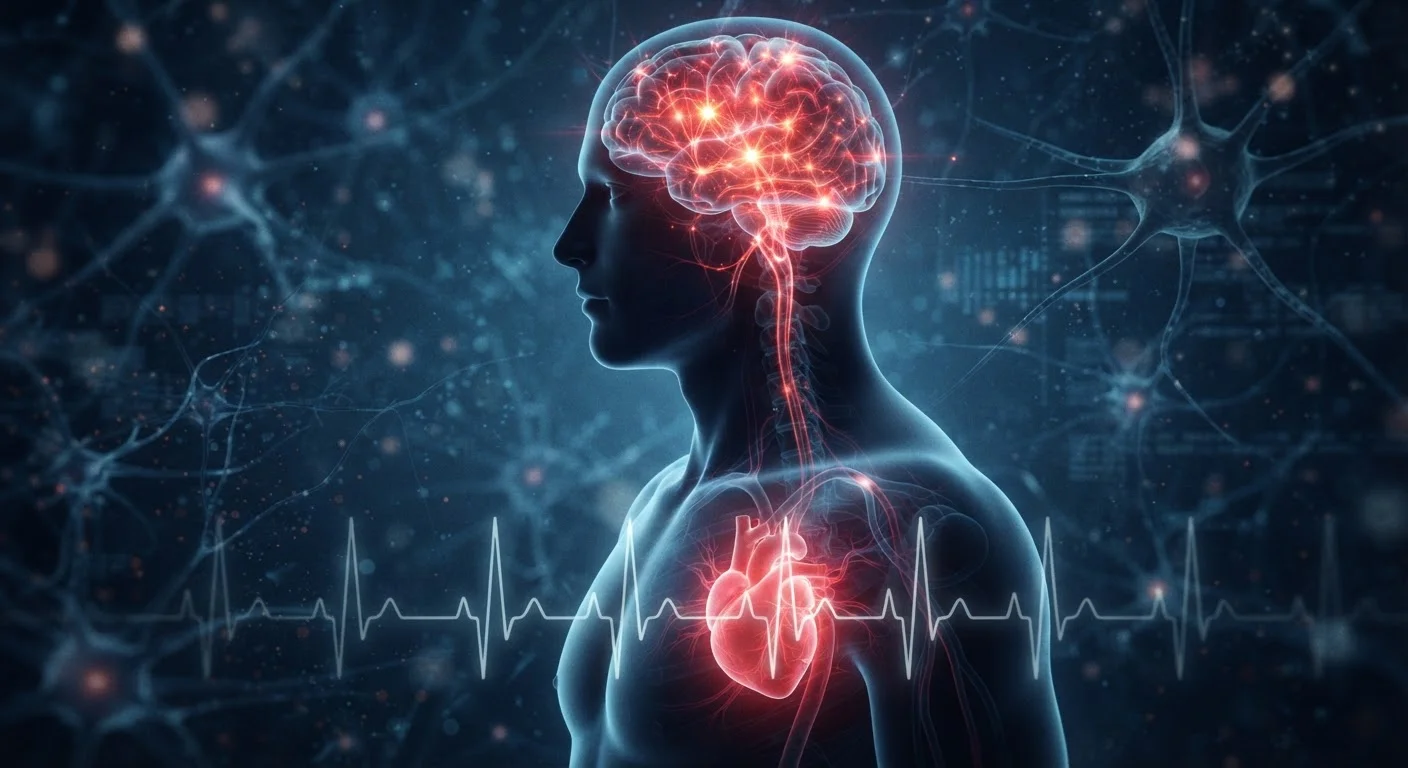
The Body's Alarm System: What Happens in the First Moments
When your brain perceives a threat - whether a near-miss on the highway or a difficult conversation with your boss - it fires a rapid signal through your nervous system. The adrenal glands release adrenaline (epinephrine), causing your heart to beat faster, your breathing to quicken, and your muscles to tense. This is the fight-or-flight response, and it's remarkably efficient.
Simultaneously, your hypothalamus sets off a hormonal chain reaction involving the pituitary and adrenal glands - collectively known as the HPA axis - resulting in the release of cortisol, often called the primary stress hormone. Cortisol raises blood sugar to fuel your muscles, temporarily suppresses non-essential functions like digestion and immune response, and keeps your brain on high alert.
In the short term, this is exactly what the body is designed to do. The problems begin when the alarm never fully turns off.
Short Stress vs. Long Stress: Know the Difference
A racing heart before a presentation is acute stress - it fades within minutes and rarely causes lasting harm. It's the unrelenting, low-grade pressure that persists over weeks without relief that drives physiological damage. Building even brief recovery periods into your day - a short walk, a few minutes of slow breathing - helps the nervous system return to its baseline.
How Chronic Stress Wears Down Your Body Over Time
When stressors are persistent - financial pressure, caregiving demands, workplace conflict - the HPA axis remains partially activated. Cortisol levels stay elevated, and the body's systems that were temporarily suppressed during the acute response never fully recover their normal rhythm.
77%
Americans reporting physical stress symptoms
According to American Psychological Association surveys, a large majority of Americans report experiencing physical symptoms they associate with stress, including fatigue, headache, and upset stomach.
2-3×
Increased cardiovascular risk with chronic stress
Research published in cardiology literature suggests individuals with high chronic stress levels may face two to three times greater risk of certain cardiovascular events compared to low-stress counterparts.
~8%
Hippocampal volume reduction linked to cortisol
Neuroimaging studies have found that individuals with prolonged high cortisol exposure can show measurable reductions in hippocampal volume, affecting memory and emotional regulation.
The cardiovascular system bears significant load. Sustained high blood pressure and heart rate increase strain on arterial walls, contributing to a risk profile associated with heart disease. The immune system, continually dialed down by cortisol, becomes less effective at fighting infection. Many people notice they get sick more often during prolonged high-stress periods - this is a recognized physiological pattern, not coincidence.
The gut is also deeply sensitive to stress. The enteric nervous system - sometimes called the "second brain" - is directly influenced by cortisol and adrenaline, which can alter gut motility and microbiome balance, contributing to symptoms like nausea, cramping, or changes in bowel habits. Financial anxiety, for instance, is one well-documented stressor linked to these physical ripple effects, as explored in our article on how debt stress affects health and behavior.
What Stress Does to Your Brain
The brain is not a passive bystander in chronic stress - it is both a target and a driver of the response. Two regions are particularly affected: the hippocampus and the amygdala.
The hippocampus, central to memory formation and learning, has receptors highly sensitive to cortisol. Prolonged exposure to elevated cortisol is associated with reduced hippocampal volume, which can impair memory, focus, and the ability to contextualize fear. This may explain why people under chronic stress frequently report "brain fog" and difficulty retaining information.
The amygdala - your brain's threat-detection center - tends to become more reactive under sustained stress. Emotional responses can feel harder to regulate, and anxiety thresholds lower. This helps explain why chronic stress and anxiety disorders are so often intertwined.
Sleep is another critical casualty. Elevated cortisol at night interferes with the slow-wave and REM sleep stages essential for emotional processing and memory consolidation. The relationship runs both ways: poor sleep amplifies the stress response the following day, creating a reinforcing cycle. We examine this loop in depth in our piece on how sleep deprivation undermines emotional resilience.
Stress Looks Different for Everyone
Individual stress responses vary considerably based on genetics, prior experiences, social support, and existing health conditions. What one person finds manageable, another may experience as deeply disruptive - and both responses are physiologically valid. Comparing your stress reaction to someone else's is rarely useful or accurate.
Recognizing Stress and Taking Practical Steps
Understanding that stress has real, measurable physical effects can itself be normalizing. These are not imagined symptoms or signs of weakness - they are predictable biological responses to sustained pressure.
Common signs worth paying attention to include persistent fatigue that doesn't resolve with rest, frequent headaches or muscle tension, digestive irregularities, difficulty concentrating, increased irritability, and getting sick more often than usual.
Evidence-based strategies for managing the stress response include regular moderate physical activity (which helps regulate cortisol), consistent sleep schedules, mindfulness-based practices such as slow diaphragmatic breathing or body-scan meditation, and maintaining social connection. Interestingly, similar stress mechanisms appear across species - if you're curious how mammals more broadly experience this response, our article on stress responses in pets offers a useful parallel perspective.
None of these strategies are substitutes for professional support. If stress symptoms are persistent, severe, or interfering with daily function, speaking with a qualified healthcare provider is the appropriate next step. They can help distinguish between stress, anxiety disorders, and other conditions that may require targeted treatment.
This article is for general informational and educational purposes only and is not a substitute for professional medical advice, diagnosis, or treatment. Always consult a qualified healthcare professional regarding any health concerns or before making changes to your health routine.