What Emotional Support Apps Actually Do
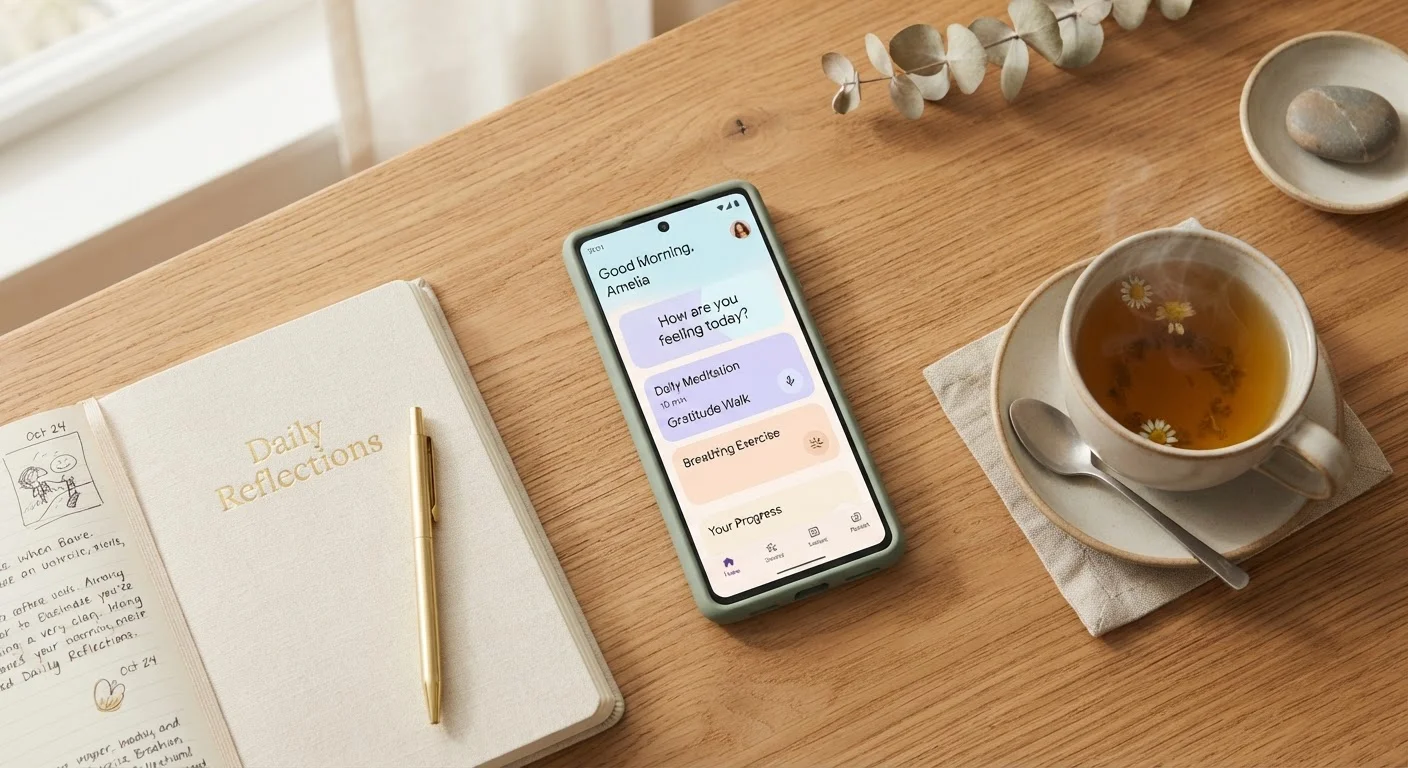
Emotional support apps cover a broad spectrum. Some deliver structured programs rooted in cognitive behavioral therapy (CBT) - a well-studied psychological approach. Others offer guided meditation, mood journaling, breathing exercises, or AI-powered chat interactions designed to mirror supportive conversation. The category is large and varied enough that blanket judgments, positive or negative, rarely hold up.
What most apps share is accessibility: they are available at any hour, require no appointment, and carry no stigma of walking into a clinic. For many Americans who face long wait times for mental health services or who live in underserved areas, an app may represent a meaningful first step toward support. Used alongside tools like structured journaling, they can form part of a broader self-care routine.
What the Evidence Says
Research into app-based mental health support is growing but remains mixed in quality. Several studies - including randomized controlled trials of CBT-based apps - have found statistically significant reductions in symptoms of anxiety and depression among users with mild-to-moderate presentations. A 2021 meta-analysis published in JMIR Mental Health found modest but meaningful improvements in depression outcomes for structured app-based interventions compared to waitlist controls.
However, significant caveats apply. Many studies are short-term, involve small samples, or were conducted by researchers with ties to the apps being tested - a recognized source of bias. Effect sizes are generally modest, and dropout rates in app-based interventions tend to be high. The gap between how apps perform in controlled trials and how they perform in everyday use is a consistent concern in the literature.
10,000+
Mental health apps available in major app stores
According to an analysis published in World Psychiatry, the mental health app market has grown to thousands of options, though only a small fraction have been independently evaluated.
~28%
Users still active after 30 days in app studies
Research on digital health interventions consistently finds that engagement drops sharply within the first month, raising questions about real-world impact.
It is also worth distinguishing between symptom types. Apps appear most useful for generalized stress, low-level anxiety, sleep difficulties, and mindfulness practice - areas where other self-care strategies like physical activity also show benefit. For moderate-to-severe depression, PTSD, or psychosis, the evidence base for apps as standalone tools is thin, and professional care remains essential.
Advantages of Emotional Support Apps
Despite their limitations, emotional support apps offer several meaningful benefits for everyday mental wellness.
Available 24/7 without appointments or waitlists
Apps remove the scheduling barrier that prevents many people from accessing support, making them especially useful during off-hours moments of anxiety or stress.
Low cost compared to traditional therapy
Many apps offer free tiers or modest subscription fees, making mood-support tools accessible to users who cannot afford regular therapy sessions.
Evidence-based techniques delivered at scale
CBT- and mindfulness-based app programs draw on validated psychological frameworks, giving users structured exercises with a meaningful theoretical foundation.
Reduces stigma around seeking help
Using a wellness app carries fewer social barriers than entering a clinic, which may help users begin engaging with mental health concepts without fear of judgment.
Supports consistency through reminders and tracking
Mood logs and daily check-in prompts can help users identify patterns over time, creating useful self-awareness that complements professional care.
For people navigating stress at different life stages, apps can serve as a low-barrier entry point. Our overview of mental wellness across adult life highlights how needs shift considerably with age - and app-based tools can be adapted to suit diverse circumstances.
Limitations and Risks Worth Knowing
The limitations of emotional support apps are as important as their benefits, and deserve candid examination.
Weak clinical evidence for most platforms
The majority of commercially available apps have not been rigorously tested in peer-reviewed trials, and those that have often show only modest effect sizes.
High dropout and low engagement rates
Studies consistently show that many users abandon app-based programs within weeks, limiting the real-world benefits compared to what controlled trials suggest.
Not appropriate for diagnosed or severe conditions
Apps are not equipped to manage moderate-to-severe depression, anxiety disorders, trauma, or psychosis - conditions that require professional clinical assessment and treatment.
Privacy and data security concerns
Mental health apps collect sensitive personal data, and privacy policies vary widely; some share or sell user data in ways that may not be immediately apparent.
Risk of delaying necessary professional care
Feeling supported by an app may reduce a user's perceived urgency to seek a clinician, potentially prolonging untreated conditions that warrant professional intervention.
There is also the question of substitution risk: an app that feels helpful may inadvertently delay someone from seeking care they actually need. Recognizing when a coping strategy is no longer enough is a critical skill - and apps, by design, are rarely equipped to make that call for users.
A Note on Data Privacy
Mental health apps often collect highly personal information - mood ratings, journal entries, behavioral patterns. Unlike medical records, this data may not be protected by HIPAA unless the app is affiliated with a healthcare provider. Before committing to any platform, review its privacy policy to understand what data is collected, how it is stored, and whether it is shared with third parties. This is a practical step many users overlook.
Using Apps as Part of a Broader Approach
The most evidence-aligned use of emotional support apps positions them as one layer within a wider mental wellness strategy - not a standalone solution. Pairing app-based mindfulness or mood tracking with adequate sleep (poor sleep meaningfully undermines emotional resilience), genuine social connection (social bonds carry measurable mental health benefits), and professional support when warranted represents a grounded, realistic approach.
If you are considering an app for more than everyday stress - or if you are experiencing persistent low mood, anxiety that disrupts daily function, or thoughts of self-harm - please consult a licensed mental health professional. Apps are tools, not clinicians.
This article is for general informational and educational purposes only and does not constitute medical or mental health advice. Always consult a qualified healthcare professional for guidance specific to your situation.