
Why This Coverage Exists
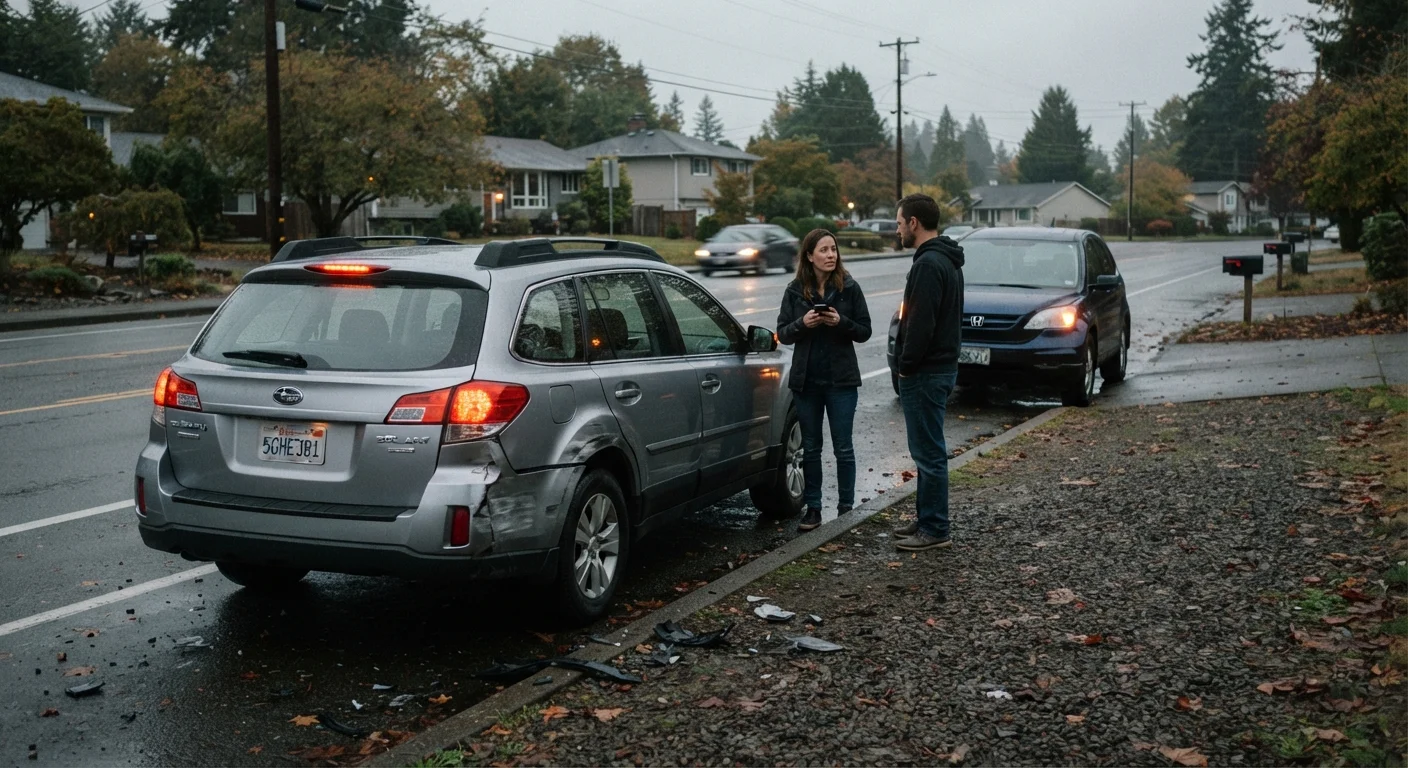
When another driver causes an accident, the standard expectation is that their liability insurance pays for your injuries and damage. That system works - unless the at-fault driver has no insurance, or has a policy too thin to cover what they caused.
This is not a rare scenario. According to the Insurance Research Council, roughly one in eight drivers on U.S. roads is uninsured. In some states, that figure is considerably higher. Even among insured drivers, many carry only the state-mandated minimums - limits that can be exhausted quickly by a single emergency room visit, let alone extended treatment or lost income.
Uninsured and underinsured motorist coverage exists to close that gap. It sits on your own policy and activates when the person who hit you can't pay - or can't pay enough. For a full breakdown of how auto insurance works as a system, see our plain-language auto insurance guide.
1 in 8
U.S. drivers estimated to be uninsured
According to the Insurance Research Council, approximately 12.6% of motorists were uninsured in a recent study period.
26%
Uninsured driver rate in some high-exposure states
Rates vary dramatically by state; some states see uninsured driver rates exceeding one in four, significantly raising the odds of an uninsured encounter.
$25,000
Common state minimum bodily injury liability limit
Many states set minimums as low as $25,000 per person - a figure that can be exhausted by a single emergency room visit for serious injuries.
UM vs. UIM: Understanding the Difference
Uninsured motorist (UM) coverage applies when the at-fault driver has zero insurance. It also typically applies in hit-and-run accidents, where the responsible party cannot be identified at all.
Underinsured motorist (UIM) coverage applies when the at-fault driver has insurance, but their policy limits aren't high enough to cover your actual losses. For example: if you sustain $80,000 in medical bills and the at-fault driver only carries $25,000 in liability coverage, your UIM coverage can help cover the remaining $55,000 - up to your own UIM policy limit.
Both coverages typically include a bodily injury component (medical costs, lost wages, pain and suffering), and some policies include a property damage component as well. Coverage specifics vary by state and insurer, so what's available to you depends on where you live and what you've purchased.
To see how UM/UIM fits alongside the foundational coverage types, see how liability, collision, and comprehensive coverage work together.
What UM/UIM Coverage Actually Pays For
Many drivers assume this coverage only handles vehicle repairs. In practice, the bodily injury portion - often the more valuable component - covers a broader set of losses:
- Medical expenses: Hospital stays, surgery, rehabilitation, and ongoing treatment costs
- Lost wages: Income you couldn't earn while recovering from accident-related injuries
- Pain and suffering: Non-economic damages recognized in most states
- Funeral expenses: Covered under some UM policies in the event of a fatal accident
Property damage coverage through UM/UIM is less consistent. Some states offer uninsured motorist property damage (UMPD) as a separate add-on; others bundle it; some don't include it at all. If vehicle repair coverage matters to you, verify this specific component with your insurer rather than assuming it's included.
Match Your UM/UIM Limits to Your Liability Limits
A widely recommended starting point is to carry UM and UIM limits that mirror your liability coverage amounts. If you're willing to pay to protect others up to $100,000, it's logical to carry the same protection for yourself. Ask your insurer for a quote on higher limits before assuming you can't afford it - the cost difference is often smaller than drivers expect.
Common Misconceptions That Leave Drivers Exposed
One of the most widespread assumptions is that health insurance makes UM/UIM redundant. It doesn't. Health insurance may cover your medical bills, but it won't compensate for lost wages, pain and suffering, or vehicle damage. These are separate categories of loss that require separate coverage.
Another misconception: that collision coverage fills the gap. Collision pays for your vehicle damage regardless of fault, but it doesn't cover medical bills or lost income - and it comes with a deductible. UM/UIM handles the liability side of the equation that collision doesn't touch.
There's also a tendency to think, "It won't happen to me." But the risk isn't about personal driving habits. You can be a careful, experienced driver and still be struck by someone with no policy at all. Common auto insurance myths often contribute to underprotection - and this is one area where that gap has real financial consequences.
“People often buy the minimum required by law and think they're protected - but minimum coverage was never designed to make a seriously injured person whole. It was designed to meet a legal threshold.”
— J. Robert Hunter, Former Director of Insurance, Consumer Federation of America
How to Review and Strengthen Your Current Coverage
Start with your policy's declarations page - the summary document that lists your coverage types and limits. If you don't see UM or UIM listed, you may not have it, or it may have been waived at purchase. Some states require insurers to offer it and have you sign a waiver if you decline; others require the coverage outright.
If you do have UM/UIM, look at the limits. A common starting benchmark is matching your UM/UIM limits to your liability limits - if you carry $100,000 in bodily injury liability, carrying $100,000 in UM/UIM bodily injury is a reasonable baseline. Higher limits are available in most states and tend to add relatively modest cost compared to the protection they provide.
Finally, ask your insurer specifically about property damage components and whether hit-and-run is covered under your UM provision. These details vary and are worth confirming in writing. For a broader look at coverage gaps drivers frequently miss, see where drivers commonly go wrong with auto insurance.
This article is for general informational purposes only and does not constitute personalized insurance, legal, or financial advice. Coverage availability, requirements, and terms vary by state and insurer. Consult a licensed insurance agent to understand what applies to your specific situation and review your actual policy documents for coverage details.